 ChipApex | Global Electronic Components Supplier
SEARCH
Search Product
Search Post
— IC芯片 | 连接器 | 传感器 | 被动器件 —
Search productSearch post
— IC芯片 | 连接器 | 传感器 | 被动器件 —
Consult the customer manager about the wholesale price.
consultation hotline:86-132-6715-2157
email:[email protected]
Contact the product manager for consultation. One-stop consultation is available.
Do you want a lower wholesale price? Please send us your inquiry and we will reply immediately.
The ADM211EARU-REEL is a robust RS-232 line transceiver from the ADM2xxE family, manufactured by Analog Devices Inc. It operates from a single 5 V power supply and supports data rates up to 230 kbps. The device integrates four drivers and five receivers with full duplex capability. Key electrical parameters include an operating voltage range of 4.5 V to 5.5 V and a typical quiescent current of 13 mA. In shutdown mode, power consumption drops to 1 μW. It features ±15 kV ESD protection on all I/O lines and complies with EMC directives. The component is housed in a 28-lead TSSOP package.
Verify the specific ordering suffix RU-REEL against the manufacturer's official documentation to confirm the tape-and-reel packaging format and TSSOP-28 variant. Ensure compatibility with existing PCB footprints and reflow soldering profiles suitable for surface-mount technology. Cross-reference the part number with authorized distributors to confirm current availability and authenticity.
Select this component when designing systems requiring high EMI/EMC compliance and robust ESD protection for RS-232 interfaces. It serves as a plug-in upgrade for older MAX2xxE designs. Consider the ADM213E if two receivers must remain active during shutdown for peripheral monitoring. Verify that the 230 kbps data rate meets system requirements and that the 5 V supply voltage aligns with the target platform.
This part belongs to the ADM2xxE series of ruggedized RS-232 transceivers designed for harsh electrical environments. The 'E' suffix denotes enhanced EMC performance and ESD protection compared to standard ADM2xx devices. The ADM211E variant specifically provides four drivers and five receivers with full shutdown capability, distinguishing it from the ADM213E which maintains receiver activity in shutdown mode.
The datasheet identifies the ADM211E as a plug-in upgrade for MAX2xxE devices. Designers should verify pinout compatibility and electrical characteristics before substituting legacy parts. No other direct cross-model replacements are explicitly listed in the provided documentation.
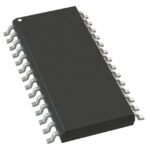 ADM211EARU-REEL
The activity of extra discounts on wholesale prices is in full swing…
Please fill in your contact information and we will send you the latest wholesale price list.







