 ChipApex | Global Electronic Components Supplier
SEARCH
Search Product
Search Post
— IC芯片 | 连接器 | 传感器 | 被动器件 —
Search productSearch post
— IC芯片 | 连接器 | 传感器 | 被动器件 —
Consult the customer manager about the wholesale price.
consultation hotline:86-132-6715-2157
email:[email protected]
Contact the product manager for consultation. One-stop consultation is available.
Do you want a lower wholesale price? Please send us your inquiry and we will reply immediately.
The ADM213EARZ-REEL is an RS-232 line transceiver from Analog Devices, operating on a single 5 V supply. It features four drivers and five receivers with a guaranteed data rate of 230 kbps. The device includes shutdown and enable control pins; in shutdown mode, the charge pump and three receivers are disabled while two receivers remain active for peripheral monitoring. It provides ±15 kV ESD protection and complies with EMC directives. The component utilizes internal TTL/CMOS inputs with pull-up resistors and RS-232 inputs with pull-down resistors. It requires four external 0.1 μF capacitors for the charge pump and operates within a temperature range of -40°C to +85°C.
Verify the specific package variant against the datasheet ordering guide, as the REEL suffix indicates tape-and-reel packaging but does not specify the physical footprint. Confirm the presence of the SHDN and EN pins matches the ADM213E truth table requirements for your system design. Ensure the voltage supply remains within the 4.5 V to 5.5 V range for optimal performance.
Select this component when high ESD immunity and EMC compliance are required for RS-232 interfaces. The ADM213E is distinct from the ADM211E due to its unique shutdown behavior where two receivers remain active. Verify that the 230 kbps data rate meets the application's speed requirements and that the 28-pin package fits the PCB layout constraints.
The ADM213E belongs to the ADM2xxE family of ruggedized RS-232 transceivers designed for harsh electrical environments. This family offers backward compatibility with earlier ADM2xx products, facilitating easy upgrades. The ADM213E specifically differentiates itself by allowing receiver monitoring during shutdown, making it suitable for battery-operated systems requiring peripheral wake-up capabilities.
The ADM211E is a related model within the same family but lacks the active receiver feature during shutdown. Other models like the ADM206E, ADM207E, and ADM208E offer different driver/receiver counts and pin configurations. Direct substitution requires verifying pin compatibility and functional differences in shutdown modes.
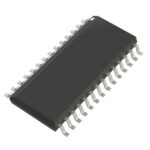 ADM213EARZ-REEL
The activity of extra discounts on wholesale prices is in full swing…
Please fill in your contact information and we will send you the latest wholesale price list.





