 ChipApex | Global Electronic Components Supplier

SEARCH
Search Product
Search Post
— IC芯片 | 连接器 | 传感器 | 被动器件 —
Search productSearch post
— IC芯片 | 连接器 | 传感器 | 被动器件 —
Consult the customer manager about the wholesale price.
consultation hotline:86-132-6715-2157
email:[email protected]
Contact the product manager for consultation. One-stop consultation is available.
Do you want a lower wholesale price? Please send us your inquiry and we will reply immediately.
The ADM231LAQ is a CMOS RS-232 line transceiver designed for EIA-232-E and V.28 communication interfaces. It features two drivers and two receivers, operating from dual power supplies: VCC at 5 V ± 10% and V+ ranging from 7.5 V to 13.2 V. The device utilizes an internal charge pump to generate a negative supply voltage (V–) from the V+ input. It supports data rates up to 120 kbps with a typical output voltage swing of ±9 V under a 3 kΩ load. The component is housed in a 14-pin Ceramic Dual In-Line Package (CERDIP) and operates within an industrial temperature range of -40°C to +85°C.
Verify that the ordering suffix 'A' corresponds to the industrial temperature grade (-40°C to +85°C) as defined by Analog Devices. Confirm the package type matches the required 14-pin CERDIP footprint. Ensure the design accommodates the specific requirement for an external V+ supply between 7.5 V and 13.2 V, distinct from standard single-supply variants.
Select this part when a single 5 V digital logic supply is unavailable or when a higher positive rail exists for the charge pump. Unlike the ADM232L which requires four capacitors for a full dual-rail generation from 5 V, the ADM231L uses only two capacitors but mandates an external V+ source. This configuration reduces component count while maintaining compatibility with existing system power architectures.
The ADM231LAQ belongs to the ADM2xxL family of enhanced CMOS RS-232 transceivers. This series improves upon the legacy AD2xx family by offering lower power consumption, faster slew rates, and support for smaller 1 µF capacitors. The 'L' designation indicates low-power CMOS technology optimized for reduced dissipation compared to earlier bipolar implementations.
The ADM232L serves as a functional alternative if a single 5 V supply is preferred, though it requires four external capacitors instead of two. The ADM239L offers similar dual-supply operation but includes five receivers and three drivers. Verify pinout compatibility and capacitor requirements before substituting.
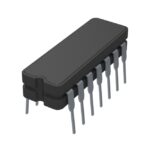 ADM231LAQ

The activity of extra discounts on wholesale prices is in full swing…
Please fill in your contact information and we will send you the latest wholesale price list.





