 ChipApex | Global Electronic Components Supplier
SEARCH
Search Product
Search Post
— IC芯片 | 连接器 | 传感器 | 被动器件 —
Search productSearch post
— IC芯片 | 连接器 | 传感器 | 被动器件 —
Consult the customer manager about the wholesale price.
consultation hotline:86-132-6715-2157
email:[email protected]
Contact the product manager for consultation. One-stop consultation is available.
Do you want a lower wholesale price? Please send us your inquiry and we will reply immediately.
The ADM236LJNZ is a single-supply CMOS RS-232 transceiver from Analog Devices, designed for EIA-232-E and V.28 interfaces without requiring external ±12 V supplies. It integrates four drivers and three receivers within a 24-pin package. The device operates on a single +5 V supply, utilizing internal charge pumps to generate the necessary voltage levels. Key electrical parameters include a data rate of 120 kbps, an output voltage swing of ±9 V, and receiver input protection up to ±30 V. It features low power shutdown capability with current consumption ≤1 µA, alongside TTL/CMOS-compatible inputs and outputs.
Verify that the ordering suffix JNZ corresponds to the specific commercial temperature range and RoHS-compliant packaging configuration required for your design. Confirm pinout compatibility if replacing legacy components, as the 24-pin layout differs from smaller packages in the same family. Ensure the supplier provides documentation confirming the component meets the specified EIA-232-E standards.
Select this component when a system requires multiple transmitter and receiver channels but lacks a negative voltage rail. The integrated shutdown mode makes it suitable for battery-operated designs where minimizing quiescent current is critical. Consider the 24-pin footprint constraints during PCB layout, as it accommodates four drivers and three receivers compared to simpler two-channel alternatives.
The ADM236L belongs to the ADM2xxL family of enhanced RS-232 line drivers and receivers. This series improves upon earlier AD2xx models by offering lower power consumption, faster slew rates, and compatibility with smaller external capacitors. The L-series designation indicates optimized performance for single-supply applications, distinguishing it from parts requiring dual supplies or lacking integrated charge pumps.
The ADM241L serves as a functional substitute within the same family, offering similar capabilities but with five receivers instead of three and a 28-pin package. Designers must account for the additional pin count and potential differences in pin assignments when migrating between these variants.
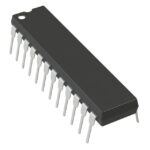 ADM236LJNZ
The activity of extra discounts on wholesale prices is in full swing…
Please fill in your contact information and we will send you the latest wholesale price list.





