 ChipApex | Global Electronic Components Supplier
SEARCH
Search Product
Search Post
— IC芯片 | 连接器 | 传感器 | 被动器件 —
Search productSearch post
— IC芯片 | 连接器 | 传感器 | 被动器件 —
Consult the customer manager about the wholesale price.
consultation hotline:86-132-6715-2157
email:[email protected]
Contact the product manager for consultation. One-stop consultation is available.
Do you want a lower wholesale price? Please send us your inquiry and we will reply immediately.
The ADM242ANZ is an 18-lead dual RS-232 transceiver in a plastic DIP package. It operates from a single 5 V supply with a transmission rate of 200 kB/s. The device integrates on-board DC-DC converters generating ±9 V output swings and supports ±30 V receiver input levels. It features two drivers and two receivers, meeting EIA-232-E specifications. Power consumption is under 5 mA normally, reducing to 0.1 mA in shutdown mode where drivers disable but receivers remain active.
Verify the specific suffix ANZ indicates RoHS compliance and the N-18 package option when sourcing. Confirm the component matches the Analog Devices datasheet revision C specifications for electrical parameters. Ensure the supplier provides valid traceability documentation for industrial temperature range applications.
Select this model over the ADM222 variant if independent receiver enable functionality is required while maintaining shutdown power savings. The ADM242 allows bus sharing by disabling outputs without cutting power to the receive circuitry. Verify that the 18-lead DIP footprint fits the target PCB layout constraints compared to surface-mount alternatives.
This component belongs to the ADM222/ADM232A/ADM242 family of high-speed CMOS RS-232 drivers and receivers. It serves as a pin-compatible upgrade for legacy AD232 and ADM232L devices. The family utilizes BiCMOS technology to combine low-power CMOS with high-speed bipolar circuitry for efficient data transmission.
Public confirmed substitute part numbers include ADM222ANZ and ADM232AAN. These variants share similar core RS-232 functionality but differ in control pin configurations and available package options within the same product family.
In shutdown mode, the ADM242 disables the transmitters but keeps the receivers operational, whereas the ADM222 disables both transmitters and receivers completely.
The EN pin is an active-low digital input that allows the receiver outputs to be disabled independently of the shutdown function, facilitating sharing of a common bus.
No, the slew rate is limited to less than 30 V/µs internally without the need for external slew limiting capacitors.
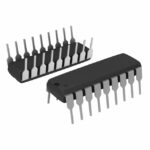 ADM242ANZ
The activity of extra discounts on wholesale prices is in full swing…
Please fill in your contact information and we will send you the latest wholesale price list.





