 ChipApex | Global Electronic Components Supplier
SEARCH
Search Product
Search Post
— IC芯片 | 连接器 | 传感器 | 被动器件 —
Search productSearch post
— IC芯片 | 连接器 | 传感器 | 被动器件 —
Consult the customer manager about the wholesale price.
consultation hotline:86-132-6715-2157
email:[email protected]
Contact the product manager for consultation. One-stop consultation is available.
Do you want a lower wholesale price? Please send us your inquiry and we will reply immediately.
The ADMV8420ACPZ-R5 is a monolithic microwave integrated circuit (MMIC) tunable band-pass filter operating from 10 GHz to 21.7 GHz. It features a user-selectable passband frequency controlled by an analog voltage applied to the VFCTL pin, ranging from 0 V to 15 V. The center frequency (fCENTER) varies between 11.1 GHz and 19.6 GHz. The device exhibits a 3 dB bandwidth of approximately 20% and a 20 dB bandwidth of approximately 40%. Key electrical specifications include a typical insertion loss of 5 dB, return loss of 8.5 dB, and input third-order intercept point (IP3) of 31 dBm. It is housed in a 24-lead, 4 mm × 4 mm RoHS-compliant LFCSP package.
Verify the specific ordering suffix -R5 indicates tape and reel packaging when sourcing components. Confirm that the procurement channel provides valid manufacturer traceability for Analog Devices Inc. products. Ensure the received units match the RoHS-compliant specification and operate within the stated temperature range of −40°C to +85°C. Check for moisture sensitivity level (MSL) handling requirements upon delivery.
Select this component when a dynamically adjustable band-pass filter is required in the V-band frequency range. Consider the 200 ns amplitude settling time and phase sensitivity characteristics for system timing constraints. Evaluate the control voltage interface requirements, noting the need for low baseband noise to minimize additive phase noise. Ensure the application can accommodate the 50 Ω dc-coupled RF interfaces without external biasing.
The ADMV8420ACPZ-R5 belongs to the ADMV8420 family of tunable band-pass filters manufactured by Analog Devices Inc. It shares core functional specifications with the standard ADMV8420ACPZ variant but differs in packaging format. The device is part of a series designed to replace larger, less flexible filtering solutions in high-frequency applications.
Publicly confirmed substitute part numbers are not available in the provided documentation. Designers should verify compatibility with existing board layouts if considering alternatives, as pin configurations and thermal requirements may differ significantly across different filter families.
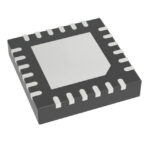 ADMV8420ACPZ-R5
The activity of extra discounts on wholesale prices is in full swing…
Please fill in your contact information and we will send you the latest wholesale price list.





