 ChipApex | Global Electronic Components Supplier
SEARCH
Search Product
Search Post
— IC芯片 | 连接器 | 传感器 | 被动器件 —
Search productSearch post
— IC芯片 | 连接器 | 传感器 | 被动器件 —
Consult the customer manager about the wholesale price.
consultation hotline:86-132-6715-2157
email:[email protected]
Contact the product manager for consultation. One-stop consultation is available.
Do you want a lower wholesale price? Please send us your inquiry and we will reply immediately.
The ADN2530YCPZ-WP is a high-speed differential VCSEL driver manufactured by Analog Devices Inc. Designed for optical interconnect applications, this component supports data rates up to 11.3 Gbps. It features active back-termination technology to optimize signal integrity and reduce reflections in high-frequency transmission lines. The device integrates precise current control loops necessary for driving vertical-cavity surface-emitting lasers with low jitter and high linearity. Packaged in an LFCSP format, it operates within standard industrial temperature ranges and requires a single supply voltage configuration typical for modern optical transceiver modules.
Verify the specific suffix YCPZ-WP against the manufacturer's latest datasheet to confirm pinout compatibility and thermal specifications. Ensure that the active back-termination requirements align with your PCB trace impedance design. Confirm availability status as specialized RF components may have limited stock or long lead times depending on the manufacturing batch.
Select this component when designing systems requiring differential VCSEL drivers with integrated termination for speeds up to 11.3 Gbps. Consider the power dissipation characteristics and thermal management needs of the LFCSP package. Evaluate the control interface requirements against your system's digital logic levels to ensure proper integration without additional level shifting circuitry.
This part belongs to the ADN25xx series of laser diode and VCSEL drivers from Analog Devices. It is engineered for next-generation optical communication standards where signal integrity at multi-gigabit speeds is critical. The series typically includes variants for different data rates and modulation types, positioning this model specifically for VCSEL-based short-reach optical links.
The ADN2526ACPZ is a documented alternative within the same product family, offering similar 11.3 Gbps performance with active back-termination for laser diode applications. Verify pin-to-pin compatibility and electrical parameter alignment before substitution.
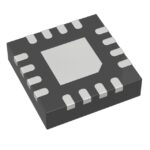 ADN2530YCPZ-WP
The activity of extra discounts on wholesale prices is in full swing…
Please fill in your contact information and we will send you the latest wholesale price list.





