 ChipApex | Global Electronic Components Supplier
SEARCH
Search Product
Search Post
— IC芯片 | 连接器 | 传感器 | 被动器件 —
Search productSearch post
— IC芯片 | 连接器 | 传感器 | 被动器件 —
Consult the customer manager about the wholesale price.
consultation hotline:86-132-6715-2157
email:[email protected]
Contact the product manager for consultation. One-stop consultation is available.
Do you want a lower wholesale price? Please send us your inquiry and we will reply immediately.
The ADN4621BRIZ is a dual-channel LVDS digital isolator from Analog Devices, utilizing iCoupler magnetic coupling technology. It provides 7500Vrms isolation voltage and supports data rates up to 2.5Gbps with a common mode transient immunity of 35kV/µs. The device features unidirectional channels in a 1+1 configuration within a 16-SOIC package. It operates on supply voltages of 1.7V–1.9V or 3V–3.6V, with propagation delays of 2.8ns maximum and rise/fall times of 180ps typical across an operating temperature range of -40°C to 125°C.
Verify the specific suffix BRIZ corresponds to the 16-SOIC tray packaging variant when ordering. Confirm RoHS compliance status as regulatory requirements may vary by region and revision date. Ensure the procurement channel is authorized to guarantee component authenticity and traceability. Check for any recent product change notifications that might affect pinout or electrical characteristics before finalizing supply agreements.
Select this component when bidirectional LVDS isolation is not required due to its unidirectional 1+1 channel architecture. Compare against the ADN4620 if a 2+0 configuration is needed instead. Consider the ADN4622 for quad-channel applications. Verify that the 16-SOIC footprint fits the PCB layout constraints. Ensure the system power supplies align with the specified 1.7-1.9V or 3-3.6V ranges for proper operation.
This part belongs to the ADN462x series of iCoupler digital isolators, which leverage proprietary magnetic coupling technology for high-speed data transfer. It is functionally related to the ADN4620, differing primarily in channel configuration. The series is designed for applications requiring robust isolation in high-speed digital interfaces, offering a compact alternative to traditional optocouplers with superior speed and consistency.
The ADN4620BRIZ serves as a functional substitute if a 2+0 channel configuration is acceptable. Evaluate the ADN4622BCPZ-RL for quad-channel requirements. Direct pin-to-pin replacements within the same family should be verified against the specific datasheet revisions to ensure compatibility with existing board designs and signal routing.
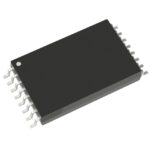 ADN4621BRIZ
The activity of extra discounts on wholesale prices is in full swing…
Please fill in your contact information and we will send you the latest wholesale price list.






