 ChipApex | Global Electronic Components Supplier

SEARCH
Search Product
Search Post
— IC芯片 | 连接器 | 传感器 | 被动器件 —
Search productSearch post
— IC芯片 | 连接器 | 传感器 | 被动器件 —
Consult the customer manager about the wholesale price.
consultation hotline:86-132-6715-2157
email:[email protected]
Contact the product manager for consultation. One-stop consultation is available.
Do you want a lower wholesale price? Please send us your inquiry and we will reply immediately.
The ADN4650BRWZ is a dual-channel digital isolator utilizing iCoupler magnetic coupling technology. It supports LVDS signaling with a data rate of 600 Mbps and offers 5000 Vrms isolation voltage. The device operates on a supply voltage range of 2.375 V to 2.625 V, drawing 60 mA of operating current. It features a propagation delay of 4 ns and rise/fall times of 350 ps. Housed in a 20-SOIC package, it functions as a unidirectional buffer with two forward channels and zero reverse channels. The component operates within a temperature range of -40°C to +125°C.
Verify the specific suffix against official Analog Devices documentation to confirm packaging configuration, as variations exist between tube and reel formats. Confirm that the selected variant matches the required isolation voltage rating and channel directionality for the target application design. Ensure compatibility with the intended PCB footprint and thermal management requirements before finalizing procurement orders.
Select this component when designing circuits requiring bidirectional or unidirectional LVDS signal isolation with high speed. Compare channel configurations carefully, as other variants in the series may offer different input/output arrangements. Ensure the power supply voltage strictly adheres to the specified 2.375 V to 2.625 V range to maintain performance specifications and prevent device malfunction during operation.
This part belongs to the ADN4650/ADN4651/ADN4652 family of dual-channel LVDS isolators from Analog Devices. These devices are designed to replace bulky optical couplers in high-speed applications. The BRWZ suffix specifically denotes the SOIC-20 package format. This family leverages silicon dioxide insulation layers to provide superior electrical isolation compared to traditional technologies.
Direct substitutes include ADN4651BRWZ and ADN4652BRWZ from the same manufacturer. Verify pinout compatibility and channel directionality differences before swapping. Other manufacturers' LVDS isolators may require significant schematic and layout modifications due to differing control logic or power requirements.
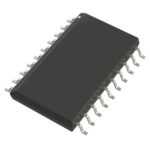 ADN4650BRWZ

The activity of extra discounts on wholesale prices is in full swing…
Please fill in your contact information and we will send you the latest wholesale price list.





