 ChipApex | Global Electronic Components Supplier

SEARCH
Search Product
Search Post
— IC芯片 | 连接器 | 传感器 | 被动器件 —
Search productSearch post
— IC芯片 | 连接器 | 传感器 | 被动器件 —
Consult the customer manager about the wholesale price.
consultation hotline:86-132-6715-2157
email:[email protected]
Contact the product manager for consultation. One-stop consultation is available.
Do you want a lower wholesale price? Please send us your inquiry and we will reply immediately.
The ADP5589ACBZ-01-R7 is a 19-port I/O expander with an integrated keypad matrix decoder, programmable logic, reset generator, and PWM generator. It operates on a supply voltage of 1.65 V to 3.6 V and communicates via an I2C interface supporting fast-mode plus up to 1 MHz. The device features a 16-event FIFO for recording key presses, releases, GPI changes, and logic activity. It supports keypad matrices up to 11 columns by 8 rows and includes dual programmable logic blocks, two reset generators, and configurable pull-up/pull-down resistors. The component is housed in a 25-ball WLCSP package measuring 1.99 mm × 1.99 mm.
Verify the specific ordering suffix -01 indicates reset pass-through functionality where RESET1 follows the RST pin level. Confirm the WLCSP-25 package dimensions match the target PCB footprint. Ensure the I2C bus capacitance limits are respected for reliable communication at the specified clock frequencies.
Select this variant when reset pass-through behavior is required for the system architecture. Compare against the -00 series if default GPIO pull-up states are preferred over reset passthrough. Consider the LFCSP-24 version if larger package handling is necessary for assembly processes. Verify that the 1.99 mm × 1.99 mm WLCSP footprint aligns with manufacturing capabilities.
This component belongs to the ADP5589 family from Analog Devices, designed specifically for portable and nonportable applications. It serves as an interface IC to expand processor I/O lines while offloading keypad scanning tasks. The ACBZ-01 suffix distinguishes it from other feature sets within the same logical family regarding reset and pull configuration behaviors.
Public confirmed substitute part numbers: ADP5589ACPZ-01-R7 (LFCSP-24 package variant), ADP5589ACBZ-00-R7 (WLCSP-25 package with different reset/pull defaults).
The ADP5589 supports a maximum keypad matrix size of 11 columns by 8 rows, accommodating up to 88 unique keys.
Ghosting is prevented by selecting a keypad matrix layout that avoids three-key combinations forming right angles. The device detects simultaneous presses across rows/columns but relies on layout design to avoid false positives.
The 16-event FIFO records key press/release events, GPI changes, and logic activity. It allows the main processor to read event status periodically rather than continuously monitoring registers, reducing power consumption.
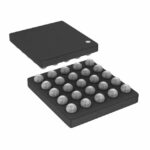 ADP5589ACBZ-01-R7

The activity of extra discounts on wholesale prices is in full swing…
Please fill in your contact information and we will send you the latest wholesale price list.





