 ChipApex | Global Electronic Components Supplier
SEARCH
Search Product
Search Post
— IC芯片 | 连接器 | 传感器 | 被动器件 —
Search productSearch post
— IC芯片 | 连接器 | 传感器 | 被动器件 —
Consult the customer manager about the wholesale price.
consultation hotline:86-132-6715-2157
email:[email protected]
Contact the product manager for consultation. One-stop consultation is available.
Do you want a lower wholesale price? Please send us your inquiry and we will reply immediately.
The ADPD105BCBZR7 is a multifunction photometric front end from Analog Devices, featuring an integrated 14-bit analog-to-digital converter (ADC) and a 20-bit burst accumulator. It supports flexible LED drivers with peak currents up to 370 mA and offers sampling frequencies ranging from 0.122 Hz to 3820 Hz. The device operates on a single 1.8 V supply (1.7 V to 1.9 V range) and utilizes an I²C interface for control and data readout. Designed for low power consumption, it includes ambient light rejection capabilities without requiring external optical filters.
Verify the specific package type associated with the BCBZ suffix against official documentation, as the ADPD105 family includes both WLCSP and LFCSP variants. Confirm that the I²C interface requirement aligns with this model, distinguishing it from SPI-only versions like the ADPD106 or ADPD107. Ensure compatibility with 1.8 V logic levels for the SDA and SCL lines.
Select the ADPD105BCBZR7 when an I²C interface is required rather than SPI. Consider the 20-bit burst accumulator for high-resolution needs in low-light conditions. Ensure the application can accommodate the 1.8 V core voltage and verify that the photodiode capacitance remains below 100 pF for optimal performance. Check if the LFCSP or WLCSP package variant matches the PCB layout constraints.
The ADPD105 belongs to a family of photometric front ends that also includes the ADPD106 and ADPD107. While all three share similar internal architectures and LED driver capabilities, they differ primarily in their digital interfaces. The ADPD105 is distinguished by its support for the I²C protocol, whereas the ADPD106 and ADPD107 are restricted to SPI communication only.
Direct replacements within the same family include the ADPD106 and ADPD107, provided the system design can be adapted from I²C to SPI. Verify pin compatibility and register mapping differences between the I²C and SPI versions before substitution.
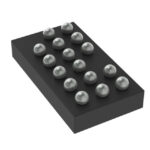 ADPD105BCBZR7
The activity of extra discounts on wholesale prices is in full swing…
Please fill in your contact information and we will send you the latest wholesale price list.





