 ChipApex | Global Electronic Components Supplier
SEARCH
Search Product
Search Post
— IC芯片 | 连接器 | 传感器 | 被动器件 —
Search productSearch post
— IC芯片 | 连接器 | 传感器 | 被动器件 —
Consult the customer manager about the wholesale price.
consultation hotline:86-132-6715-2157
email:[email protected]
Contact the product manager for consultation. One-stop consultation is available.
Do you want a lower wholesale price? Please send us your inquiry and we will reply immediately.
The ADPD105BCPZ is a multifunction photometric front end from Analog Devices, featuring an integrated analog-to-digital converter (ADC), LED drivers, and timing core. It provides best-in-class ambient light rejection without requiring external optical filters. The device includes three 370 mA LED drivers and utilizes a 20-bit burst accumulator for high-resolution data acquisition. It supports flexible sampling frequencies ranging from 0.122 Hz to 3820 Hz and offers both I²C and SPI interfaces. The component operates on a 1.8 V supply and is designed for low-power applications in wearable health monitors and clinical measurements.
Verify the specific ordering suffix against the manufacturer's official documentation to ensure correct package type and interface configuration. Confirm that the procurement source provides valid traceability and authenticity guarantees for Analog Devices components. Check for any regional distribution restrictions or compliance certifications required for your specific market.
Select the ADPD105BCPZ when an I²C interface is required alongside the full feature set including GPIOs and multiple photodiode inputs. Compare against ADPD106/ADPD107 if SPI communication is preferred or if a smaller WLCSP footprint is necessary. Ensure the application benefits from the integrated LED drivers and high-resolution accumulation capabilities before choosing this part over discrete solutions.
The ADPD105 belongs to the ADPD10x family of photometric front ends, which also includes the ADPD106 and ADPD107. While all three share similar internal architectures and performance characteristics, they differ primarily in their digital interface options and available package types. The ADPD105 specifically supports I²C communication and is offered in both LFCSP and WLCSP packages, providing design flexibility for various form factors.
Direct replacements within the same family include the ADPD106 and ADPD107, though these utilize SPI interfaces instead of I²C. Designers must account for interface differences and pinout variations when substituting these parts. No other cross-manufacturer equivalents are officially documented by Analog Devices.
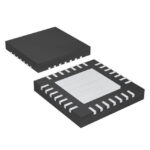 ADPD105BCPZ
The activity of extra discounts on wholesale prices is in full swing…
Please fill in your contact information and we will send you the latest wholesale price list.





