 ChipApex | Global Electronic Components Supplier

SEARCH
Search Product
Search Post
— IC芯片 | 连接器 | 传感器 | 被动器件 —
Search productSearch post
— IC芯片 | 连接器 | 传感器 | 被动器件 —
Consult the customer manager about the wholesale price.
consultation hotline:86-132-6715-2157
email:[email protected]
Contact the product manager for consultation. One-stop consultation is available.
Do you want a lower wholesale price? Please send us your inquiry and we will reply immediately.
The ADPD1080WBCPZR7 is an automotive-grade photometric front end from Analog Devices, designed for health monitoring applications. It integrates a 14-bit analog-to-digital converter (ADC), a 20-bit burst accumulator, and three LED drivers capable of 370 mA peak current. The device operates on a single 1.8 V supply with a voltage range of 1.7 V to 1.9 V. It features four photodiode channels and communicates via an I2C interface. The component supports flexible sampling frequencies ranging from 0.122 Hz to 2700 Hz and includes ambient light rejection capabilities. It is housed in a 28-lead LFCSP package and functions within an operating temperature range of -40°C to +105°C.
Verify the specific suffix WBCPZR7 against official documentation to confirm automotive qualification and reel packaging specifications. Ensure compatibility with the required I2C interface logic levels and power supply constraints before integration. Cross-reference the pinout configuration for the 28-lead LFCSP package to validate board layout requirements.
Select this component when automotive reliability standards are required for photometric sensing. The integrated I2C interface simplifies system design compared to SPI-only variants. Consider the 28-lead package size if space allows for four dedicated photodiode inputs. Evaluate the 370 mA LED driver capability against the optical path requirements of the target application.
This part belongs to the ADPD1080/ADPD1081 family of multifunction photometric front ends. The ADPD1080 variant specifically provides an I2C interface, whereas the ADPD1081 uses SPI. The WBCPZR7 designation indicates the automotive grade version packaged in a 28-lead LFCSP format. This distinguishes it from consumer-grade versions and smaller WLCSP packages available in the same product line.
The ADPD1081 serves as a functional alternative if SPI communication is preferred over I2C. For non-automotive applications, standard commercial grade versions of the ADPD1080 may be considered. Smaller footprint options exist in the WLCSP package formats, though they offer fewer photodiode connections.
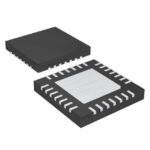 ADPD1080WBCPZR7

The activity of extra discounts on wholesale prices is in full swing…
Please fill in your contact information and we will send you the latest wholesale price list.





