 ChipApex | Global Electronic Components Supplier

SEARCH
Search Product
Search Post
— IC芯片 | 连接器 | 传感器 | 被动器件 —
Search productSearch post
— IC芯片 | 连接器 | 传感器 | 被动器件 —
Consult the customer manager about the wholesale price.
consultation hotline:86-132-6715-2157
email:[email protected]
Contact the product manager for consultation. One-stop consultation is available.
Do you want a lower wholesale price? Please send us your inquiry and we will reply immediately.
The ADPD2210ACPZ-RL is an ultralow noise, low power current amplifier designed for wearable photoplethysmography applications. It amplifies sensor signal currents by a factor of 24 while adding minimal noise, enabling the use of smaller photodiodes. The device features a typical noise floor of 80 fA/√Hz and operates with a supply current of 140 μA when active. It supports a single positive supply voltage ranging from 1.8 V to 5 V. The nominal linear output is 240 μA at 3.3 V, with a minimum linearity of 60 dB. The component is housed in a space-saving 2 mm × 2 mm LFCSP package.
Verify the specific ordering suffix RL against the manufacturer's official documentation to confirm packaging details. Ensure compatibility with the required operating temperature range of -40°C to +85°C. Confirm RoHS compliance status as indicated in the ordering guide. Cross-reference the part number with the latest datasheet revision A specifications to validate electrical parameters before integration.
Select this component for designs requiring high sensitivity with minimal power consumption. The integrated current mirror simplifies circuit topology by reducing the need for external transimpedance amplifiers. Consider the 2 mm × 2 mm package size for space-constrained wearable devices. Evaluate the power-down recovery time requirements against the application's pulse mode timing constraints.
The ADPD2210 is part of Analog Devices' portfolio of optical sensor interface solutions. It addresses the challenge of extracting small AC signals from large DC offsets in photoplethysmography systems. The device is optimized for battery-powered monitoring applications where ambient light rejection and low power are critical design factors.
The ADPD2210ACPZ-R7 is a confirmed substitute part number listed in the manufacturer's ordering guide. Verify functional equivalence and pinout compatibility before substitution.
The device is optimized for pulse mode applications, allowing the extraction of calibration signals during emitter off-periods to compensate for ambient light diffused throughout the tissue.
The REF pin provides a matched voltage reference for the current input, typically tied to the cathode of a photodiode to hold the sensor input within ±5 mV of the reference terminal.
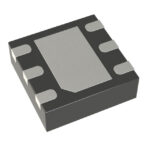 ADPD2210ACPZ-RL

The activity of extra discounts on wholesale prices is in full swing…
Please fill in your contact information and we will send you the latest wholesale price list.





