 ChipApex | Global Electronic Components Supplier

SEARCH
Search Product
Search Post
— IC芯片 | 连接器 | 传感器 | 被动器件 —
Search productSearch post
— IC芯片 | 连接器 | 传感器 | 被动器件 —
Consult the customer manager about the wholesale price.
consultation hotline:86-132-6715-2157
email:[email protected]
Contact the product manager for consultation. One-stop consultation is available.
Do you want a lower wholesale price? Please send us your inquiry and we will reply immediately.
The ADPD4101BCBZR7 is a multimodal sensor front end from Analog Devices Inc. that stimulates up to eight LEDs and measures return signals on eight separate current inputs. It features dual-channel processing with simultaneous sampling, twelve programmable time slots for synchronized measurements, and flexible input multiplexing for differential or single-ended configurations. The device supports I2C communication, offers a sampling rate from 0.004 Hz to 9 kHz, and includes on-chip digital filtering. Key electrical parameters include a transmit/receive signal chain SNR of 100 dB, AC ambient light rejection of 60 dB up to 1 kHz, and a total LED peak drive current of 400 mA. System power dissipation is 30 µW during continuous PPG measurement at 75 dB SNR and 25 Hz ODR.
Verify the specific ordering suffix BCBZR7 against the manufacturer's official documentation to confirm package type, reel quantity, and environmental compliance status. Ensure the host system interface matches the I2C protocol required by this variant, as opposed to the SPI-based ADPD4100. Confirm supply voltage compatibility with the 1.8 V analog core and 1.8 V/3.3 V compatible digital I/O specifications before integration.
Select the ADPD4101BCBZR7 when an I2C interface is preferred over SPI for system connectivity. This component is suitable for applications requiring simultaneous multi-sensor measurements, such as combining optical sensing with biopotential acquisition. Consider the 35-ball WLCSP package constraints for PCB layout and thermal management. Evaluate the need for external optical isolation, as the device's synchronous detection provides significant ambient light rejection.
This part belongs to the ADPD4100/ADPD4101 family of multimodal sensor front ends designed for healthcare and industrial sensing. While the ADPD4100 utilizes an SPI interface, the ADPD4101 variant employs I2C communication. Both share identical analog performance characteristics, including the same LED driver capabilities, input channel architecture, and signal processing blocks, differing primarily in their digital control interface.
The ADPD4100 serves as a functional substitute if the system design allows for SPI communication instead of I2C. Pin compatibility exists between the variants, but register maps and timing specifications differ due to the distinct interface protocols. Verify that the host controller supports the required clock speeds and addressing schemes for the replacement part.
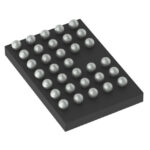 ADPD4101BCBZR7

The activity of extra discounts on wholesale prices is in full swing…
Please fill in your contact information and we will send you the latest wholesale price list.





