 ChipApex | Global Electronic Components Supplier
SEARCH
Search Product
Search Post
— IC芯片 | 连接器 | 传感器 | 被动器件 —
Search productSearch post
— IC芯片 | 连接器 | 传感器 | 被动器件 —
Consult the customer manager about the wholesale price.
consultation hotline:86-132-6715-2157
email:[email protected]
Contact the product manager for consultation. One-stop consultation is available.
Do you want a lower wholesale price? Please send us your inquiry and we will reply immediately.
The ADRF5032BCCZN is a reflective single-pole double-throw (SPDT) switch manufactured using silicon technology. It operates across a frequency range of 1 GHz to 60 GHz, featuring an insertion loss below 2.0 dB and isolation greater than 32 dB. The device provides 24 dBm RF input power handling for the through path and 21 dBm for the hot swap path. It requires ±3.3 V dual supply voltages and utilizes CMOS/LVTTL control logic. The component is housed in a 12-terminal, 2.5 mm × 2.5 mm RoHS-compliant LGA package, with an operating temperature range from -40°C to +105°C.
Verify the specific suffix BCCZN against official Analog Devices documentation to confirm package type and compliance status. Ensure that the required ±3.3V dual power supply configuration is integrated into the system design prior to procurement. Confirm that the control interface matches the specified CMOS or LVTTL logic levels. Validate thermal management requirements for the LGA package within the intended operating temperature range of -40°C to +105°C.
Select this component for applications requiring ultra-wideband switching up to 60 GHz. Consider the reflective nature of the switch when designing impedance matching networks. Verify that the system can support the necessary dual voltage supplies and control logic levels. Evaluate the power handling limits relative to the specific signal paths in the application to ensure reliable operation under maximum load conditions.
The ADRF5032 series represents a family of silicon-based RF switches designed for high-frequency applications. The ADRF5032BCCZN variant specifically denotes the packaged version suitable for surface mount assembly. This part belongs to Analog Devices' portfolio of RF solutions targeting advanced communication and sensing systems requiring wide bandwidth and fast switching speeds.
Consult official Analog Devices substitution guides for verified alternatives. Cross-reference pinout compatibility and electrical specifications before considering any substitute components.
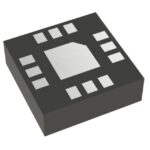 ADRF5032BCCZN
The activity of extra discounts on wholesale prices is in full swing…
Please fill in your contact information and we will send you the latest wholesale price list.





