 ChipApex | Global Electronic Components Supplier
SEARCH
Search Product
Search Post
— IC芯片 | 连接器 | 传感器 | 被动器件 —
Search productSearch post
— IC芯片 | 连接器 | 传感器 | 被动器件 —
Consult the customer manager about the wholesale price.
consultation hotline:86-132-6715-2157
email:[email protected]
Contact the product manager for consultation. One-stop consultation is available.
Do you want a lower wholesale price? Please send us your inquiry and we will reply immediately.
The ADS1211P is a 24-bit analog-to-digital converter (ADC) manufactured by Texas Instruments, utilizing delta-sigma architecture. It features four differential inputs and an integrated programmable gain amplifier (PGA). The device operates on a single 5V supply for both analog and digital domains. Data is transmitted via a standard SPI-compatible serial interface. It is housed in a 28-pin plastic small-outline dual in-line package (PDIP). The component supports sampling rates up to 16 kSPS and functions within a temperature range of -40°C to +85°C.
Verify the specific suffix 'P' confirms the PDIP package variant when sourcing. Confirm RoHS compliance status as manufacturing updates may affect material declarations. Check for obsolescence notices or product change notifications prior to final design approval. Ensure availability aligns with long-term production plans given the component's age.
Select this model if four differential inputs are required, distinguishing it from the single-channel ADS1210. Verify that the 28-pin PDIP footprint fits the target PCB layout constraints. Compare power consumption requirements against other delta-sigma ADCs if battery life is critical. Ensure the SPI interface timing matches the host microcontroller capabilities.
The ADS1211P belongs to the ADS121x family of 24-bit delta-sigma ADCs from Texas Instruments. This series is designed for high-accuracy applications where noise rejection and resolution are paramount. The 'P' suffix specifically denotes the through-hole PDIP packaging option, differentiating it from surface-mount variants like the U or N packages.
Direct pin-to-pin replacements may be limited due to the specific PDIP package and legacy status. Evaluate the ADS1211U or ADS1211N for surface-mount alternatives if board redesign is permissible. Consider newer generation devices from Texas Instruments for improved performance metrics, though pin compatibility must be verified.
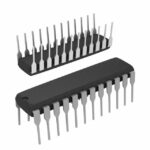 ADS1211P
The activity of extra discounts on wholesale prices is in full swing…
Please fill in your contact information and we will send you the latest wholesale price list.




