 ChipApex | Global Electronic Components Supplier
SEARCH
Search Product
Search Post
— IC芯片 | 连接器 | 传感器 | 被动器件 —
Search productSearch post
— IC芯片 | 连接器 | 传感器 | 被动器件 —
Consult the customer manager about the wholesale price.
consultation hotline:86-132-6715-2157
email:[email protected]
Contact the product manager for consultation. One-stop consultation is available.
Do you want a lower wholesale price? Please send us your inquiry and we will reply immediately.
The ADS1211UG4 is a 24-bit analog-to-digital converter (ADC) manufactured by Texas Instruments, housed in a 24-pin SOIC package. It features a sigma-delta architecture with four differential input channels and supports SPI, I2C, and 3-wire digital interfaces. The device operates on a single 5V supply, accepting analog input voltages between -10 V and +10 V. Key electrical parameters include a maximum sampling rate of 16 kS/s, an integral nonlinearity (INL) of +/- 0.0015% FSR, and a power dissipation of 60 mW. It integrates a programmable gain amplifier (PGA) and an internal reference, functioning within a temperature range of -40°C to +85°C.
Verify the specific suffix 'G4' against the manufacturer's current datasheet to confirm lead-free compliance and RoHS status. Ensure the 24-SOIC package dimensions match the target PCB footprint. Confirm that the operating temperature range of -40°C to +85°C meets the environmental requirements of the intended application before finalizing procurement.
Select this component when a 24-bit resolution and 16 kS/s throughput are required for multi-channel differential inputs. Consider the integrated PGA and internal reference if board space is limited. Verify that the 5V single-supply operation aligns with the system power architecture. Compare performance metrics such as INL and noise density against alternative ADCs if higher speed or lower power consumption is needed.
The ADS1211UG4 belongs to the ADS121x family of precision analog-to-digital converters from Texas Instruments. This series is designed for applications demanding high accuracy and low noise. The 'U' designation indicates the SOIC package type, while 'G4' typically denotes lead-free and RoHS-compliant manufacturing standards consistent with industry regulations.
Direct substitutes within the same family include the ADS1210 and ADS1212, which offer similar architectures but may differ in channel count or pinout compatibility. Verify functional equivalence regarding interface signals and register configurations before replacing the component in an existing design.
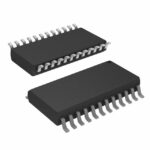 ADS1211UG4
The activity of extra discounts on wholesale prices is in full swing…
Please fill in your contact information and we will send you the latest wholesale price list.




