 ChipApex | Global Electronic Components Supplier
SEARCH
Search Product
Search Post
— IC芯片 | 连接器 | 传感器 | 被动器件 —
Search productSearch post
— IC芯片 | 连接器 | 传感器 | 被动器件 —
Consult the customer manager about the wholesale price.
consultation hotline:86-132-6715-2157
email:[email protected]
Contact the product manager for consultation. One-stop consultation is available.
Do you want a lower wholesale price? Please send us your inquiry and we will reply immediately.
The ADS1216Y/2K is a 24-bit analog-to-digital converter (ADC) from Texas Instruments, housed in a 48-TQFP package. It features an 8-channel multiplexer with differential inputs and a sigma-delta architecture. The device supports SPI interface communication and offers a sampling rate of up to 780 samples per second. Operating voltages for both analog and digital supplies range from 2.7 V to 5.25 V. Key performance metrics include a differential nonlinearity (DNL) of ±1 LSB and integral nonlinearity (INL) of ±0.0015% FSR. Power consumption is specified at 600 µW, with a maximum power dissipation of 2.5 mW. The component operates within a temperature range of -40°C to +85°C.
Verify the specific suffix 'Y/2K' against the manufacturer's latest datasheet to confirm packaging configuration and reel specifications. Ensure compatibility with system voltage levels and interface timing requirements before integration. Check for RoHS compliance status and moisture sensitivity level (MSL) ratings relevant to your assembly process. Confirm that the 48-TQFP footprint matches your PCB design guidelines.
Select this component when a single ADC channel with multiple differential inputs is required. The integrated PGA reduces external amplifier needs. Consider the 780 S/s speed limit for application bandwidth constraints. Evaluate the need for internal iDACs if driving active sensors. Compare pin count and package size against alternative solutions if space is limited.
This part belongs to the ADS1216 family of precision ADCs. It shares architectural similarities with the ADS1217 and ADS1218 but differs in channel count and specific feature sets. Application reports such as SBAA107 discuss gain calibration techniques applicable to this device family. It serves as a bridge between low-level analog signals and digital processing units in embedded systems.
Direct substitutes may include other members of the ADS121x series, such as the ADS1217 or ADS1218, depending on channel and feature requirements. Verify pinout compatibility and register mapping before substitution. Alternative packages like the Y variant without the /2K suffix may be available but require re-verification of packaging details.
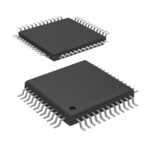 ADS1216Y/2K
The activity of extra discounts on wholesale prices is in full swing…
Please fill in your contact information and we will send you the latest wholesale price list.




