 ChipApex | Global Electronic Components Supplier
SEARCH
Search Product
Search Post
— IC芯片 | 连接器 | 传感器 | 被动器件 —
Search productSearch post
— IC芯片 | 连接器 | 传感器 | 被动器件 —
Consult the customer manager about the wholesale price.
consultation hotline:86-132-6715-2157
email:[email protected]
Contact the product manager for consultation. One-stop consultation is available.
Do you want a lower wholesale price? Please send us your inquiry and we will reply immediately.
The ADS1217IPFBTG4 is a high-precision, low-power analog-to-digital converter featuring eight differential input channels and 24-bit resolution. It utilizes a delta-sigma architecture with an integrated programmable gain amplifier (PGA) to support direct connection to various sensors. The device operates on a single supply voltage ranging from 2.7 V to 5.25 V for both analog and digital domains. Key electrical specifications include a maximum sampling rate of 780 samples per second, integral nonlinearity of 0.0012% FSR, and differential nonlinearity of ±1 LSB. It offers power consumption as low as 800 µW and includes built-in excitation current sources, GPIO pins, and a 50/60 Hz rejection filter.
Verify the suffix 'G4' indicates lead-free and RoHS compliance status consistent with Texas Instruments standards. Confirm the package designation 'IPFB' corresponds to the 48-pin TQFP form factor. Ensure the operating environment falls within the specified -40°C to +85°C temperature range. Cross-reference the datasheet revision date to confirm pinout and electrical characteristics have not changed in newer revisions.
Select this component when eight simultaneous differential channels are required with high resolution. Consider the internal PGA settings to match the specific sensor output voltage levels. Evaluate the trade-off between sampling speed and noise performance based on the available filtering options. Verify that the SPI interface timing requirements align with the host microcontroller capabilities.
This part belongs to the ADS121x family of precision ADCs from Texas Instruments. It shares architectural similarities with the ADS1216 and ADS1218 but distinguishes itself by offering eight input channels instead of two or four. The IPFBTG4 variant represents the tape-and-reel packaging option with green (lead-free/RoHS) materials, differing from the tube-packaged IPFBT version.
Yes, while optimized for differential inputs, the device can be configured for single-ended measurements by connecting unused channels appropriately.
The integrated excitation current sources (IDACs) provide stable current to energize bridge sensors, eliminating the need for external current source circuitry.
The ADS1217IPFBTG4 operates with a single supply voltage between 2.7 V and 5.25 V, allowing flexibility in system design while maintaining performance across this range.
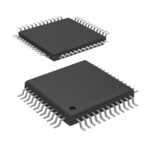 ADS1217IPFBTG4
The activity of extra discounts on wholesale prices is in full swing…
Please fill in your contact information and we will send you the latest wholesale price list.




