 ChipApex | Global Electronic Components Supplier
SEARCH
Search Product
Search Post
— IC芯片 | 连接器 | 传感器 | 被动器件 —
Search productSearch post
— IC芯片 | 连接器 | 传感器 | 被动器件 —
Consult the customer manager about the wholesale price.
consultation hotline:86-132-6715-2157
email:[email protected]
Contact the product manager for consultation. One-stop consultation is available.
Do you want a lower wholesale price? Please send us your inquiry and we will reply immediately.
The ADS1224IPWT is a low-power, 24-bit analog-to-digital converter (ADC) from Texas Instruments, housed in a 20-pin TSSOP package. It utilizes a sigma-delta architecture to provide high-resolution data conversion with a maximum sampling rate of 240 samples per second. The device supports four input channels and accepts both differential and single-ended inputs. It operates on a single supply voltage ranging from 2.7 V to 5.5 V for both analog and digital domains. Communication is handled via an SPI interface. Key performance metrics include a differential nonlinearity (DNL) of +/- 1 LSB and an integral nonlinearity (INL) of 0.0015% FSR. Power consumption is specified at 1.35 mW typical.
Verify the specific suffix IPWT corresponds to the TSSOP-20 package and reel/cut-tape packaging format when ordering. Confirm RoHS compliance status through official manufacturer documentation or authorized distributor datasheets prior to procurement. Ensure compatibility with existing PCB footprint designs for the 20-lead thin-shrink small-outline package.
Select this component when high resolution is required alongside moderate speed capabilities. Compare against the ADS1220 if higher sampling rates up to 2 kSPS are necessary, noting the pinout differences. Consider the ADS1222 if only two input channels are sufficient for the application design. Verify that the 2.7 V minimum supply voltage aligns with the system's power budget constraints.
This part belongs to the ADS122x family of precision ADCs designed for low-power applications. It shares architectural similarities with the ADS1220 and ADS1222 but offers four input channels instead of two. The IPWT suffix indicates a plastic TSSOP package with tape-and-reel shipping options, distinguishing it from tube-packaged variants like the ADS1224IPW.
The ADS1224IPWR is a pin-compatible alternative available in a reel package variant. For applications requiring higher speed, the ADS1220 series may serve as a functional upgrade, though pin configurations differ. No direct cross-manufacturer equivalents are documented in the provided source material.
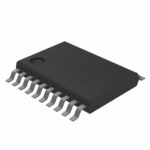 ADS1224IPWT
The activity of extra discounts on wholesale prices is in full swing…
Please fill in your contact information and we will send you the latest wholesale price list.





