 ChipApex | Global Electronic Components Supplier
SEARCH
Search Product
Search Post
— IC芯片 | 连接器 | 传感器 | 被动器件 —
Search productSearch post
— IC芯片 | 连接器 | 传感器 | 被动器件 —
Consult the customer manager about the wholesale price.
consultation hotline:86-132-6715-2157
email:[email protected]
Contact the product manager for consultation. One-stop consultation is available.
Do you want a lower wholesale price? Please send us your inquiry and we will reply immediately.
The ADS122U04IPW is a 24-bit Sigma-Delta analog-to-digital converter (ADC) from Texas Instruments, housed in a 16-pin TSSOP package. It features four input channels with a maximum sampling rate of 2 kSPS and supports both differential and single-ended inputs. The device operates on analog and digital supply voltages ranging from 2.3 V to 5.5 V, with an operating temperature range of -40°C to +125°C. Key integrated components include a programmable gain amplifier (PGA), internal voltage reference, excitation current sources (iDACs), GPIO, oscillator, and temperature sensor. Communication is handled via a UART interface.
Verify the specific suffix IPW corresponds to the TSSOP-16 tube packaging configuration when sourcing. Confirm RoHS compliance status through official manufacturer documentation prior to integration. Ensure the UART interface requirements align with the host microcontroller's communication protocols. Validate that the 2.3 V to 5.5 V supply range matches the system power architecture.
Select this model over variants like ADS122C04 if UART connectivity is preferred over I2C. Consider the ADS122U04IRTER variant if reel packaging is required for automated assembly instead of tubes. Evaluate the ADS112U04 series if 16-bit resolution suffices for lower cost requirements. Ensure the 2 kSPS sampling rate meets the bandwidth needs of the target application signals.
This component belongs to the ADS122Uxx family of low-power, small-size ADCs designed for precision measurement applications. It shares architectural similarities with other devices in the series but is distinguished by its UART interface and 24-bit resolution. The IPW suffix specifically denotes the plastic thin-shrink small-outline package type used in this part number.
ADS122U04IRTER: Same electrical specifications with reel packaging instead of tubes.
The maximum sampling rate is 2 kSPS.
Yes, it supports both differential and single-ended input types.
It uses a UART interface for data transmission and control.
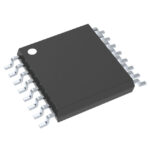 ADS122U04IPW
The activity of extra discounts on wholesale prices is in full swing…
Please fill in your contact information and we will send you the latest wholesale price list.




