 ChipApex | Global Electronic Components Supplier
SEARCH
Search Product
Search Post
— IC芯片 | 连接器 | 传感器 | 被动器件 —
Search productSearch post
— IC芯片 | 连接器 | 传感器 | 被动器件 —
Consult the customer manager about the wholesale price.
consultation hotline:86-132-6715-2157
email:[email protected]
Contact the product manager for consultation. One-stop consultation is available.
Do you want a lower wholesale price? Please send us your inquiry and we will reply immediately.
The ADS1230IPWR is a 20-bit delta-sigma analog-to-digital converter (ADC) designed for resistive bridge sensor applications. It integrates a low-noise programmable gain amplifier (PGA) with selectable gains of 64 or 128, supporting full-scale differential inputs of ±39 mV or ±19.5 mV respectively. The device operates on a single supply voltage ranging from 2.7 V to 5.3 V for both analog and digital sections. It offers two data rates: 10 SPS with 50/60 Hz line frequency rejection and 80 SPS. The component features an internal oscillator or external clock input, serial interface compatibility with microcontrollers, and operates within a temperature range of -40°C to +85°C in a 16-pin TSSOP package.
Verify the specific suffix 'IPWR' corresponds to the tape-and-reel packaging variant when sourcing components. Confirm RoHS compliance status and lead times directly with authorized distributors, as availability may vary by region. Ensure the ordering part number matches the required package style and moisture sensitivity level specifications for your assembly process.
Select this component when high-resolution measurement of small differential signals from resistive bridges is required. The integrated PGA eliminates the need for external amplification stages, reducing board space and component count. Consider the 10 SPS mode if strict 50/60 Hz rejection is necessary, or the 80 SPS mode for faster response times. Verify that the external reference voltage requirements align with your system design constraints.
The ADS1230 belongs to Texas Instruments' family of precision delta-sigma ADCs tailored for industrial sensor applications. It serves as a complete front-end solution by combining analog conditioning and digital conversion in a single package. This integration simplifies design complexity compared to discrete amplifier and ADC combinations, offering a compact alternative for weight sensing and pressure monitoring systems.
The ADS1230IPWRG4 is a documented equivalent part number representing the same functional device with Green/RoHS-compliant manufacturing markings. Verify pinout and electrical specifications remain identical before substitution. No other cross-model replacements are confirmed in public documentation.
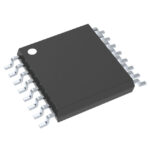 ADS1230IPWR
The activity of extra discounts on wholesale prices is in full swing…
Please fill in your contact information and we will send you the latest wholesale price list.





