 ChipApex | Global Electronic Components Supplier
SEARCH
Search Product
Search Post
— IC芯片 | 连接器 | 传感器 | 被动器件 —
Search productSearch post
— IC芯片 | 连接器 | 传感器 | 被动器件 —
Consult the customer manager about the wholesale price.
consultation hotline:86-132-6715-2157
email:[email protected]
Contact the product manager for consultation. One-stop consultation is available.
Do you want a lower wholesale price? Please send us your inquiry and we will reply immediately.
The ADS1231IDR is a single-channel, 24-bit delta-sigma analog-to-digital converter (ADC) designed for resistive bridge sensors. It integrates a low-noise programmable gain amplifier with a fixed gain of 128, an internal oscillator, and a bridge power switch. The device supports two selectable data rates: 10 samples per second (SPS) with simultaneous 50 Hz and 60 Hz rejection, and 80 SPS. It operates on a single supply voltage ranging from 3 V to 5.3 V for both analog and digital domains. The component features a simple serial interface requiring only clock and data lines, eliminating the need for chip select signals. It is housed in a 16-lead SOIC package and functions within a temperature range of -40°C to +85°C.
Verify the specific suffix 'IDR' indicates the tape-and-reel packaging variant distinct from the tube-packaged 'ID'. Confirm the operating temperature grade matches industrial requirements (-40°C to +85°C). Ensure the external reference voltage source aligns with the device's input specifications. Validate that the host microcontroller can generate the required clock frequency for the selected data rate.
Select this component when a dedicated ADC for bridge sensors is required without the complexity of external PGA configuration. The fixed gain of 128 suits sensors with small differential outputs. Consider the 10 SPS mode if 50/60 Hz line noise rejection is critical. Verify that the system does not require multiple channels, as this is a single-converter device.
The ADS1231 belongs to Texas Instruments' family of precision ADCs optimized for bridge sensors. It complements devices like the ADS1230 (20-bit) and ADS1232 (dual-channel). Unlike general-purpose sigma-delta ADCs, it lacks digital registers for configuration, relying instead on hardware pins for gain and speed settings.
The ADS1230 offers similar functionality but with 20-bit resolution. The ADS1232 provides dual-channel capability in a different package. Verify pin compatibility and software timing differences when substituting these parts.
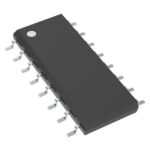 ADS1231IDR
The activity of extra discounts on wholesale prices is in full swing…
Please fill in your contact information and we will send you the latest wholesale price list.




