ChipApex | Global Electronic Components Supplier
SEARCH
Search Product
Search Post
— IC芯片 | 连接器 | 传感器 | 被动器件 —
Search productSearch post
— IC芯片 | 连接器 | 传感器 | 被动器件 —
Consult the customer manager about the wholesale price.
consultation hotline:86-132-6715-2157
email:[email protected]
Contact the product manager for consultation. One-stop consultation is available.
Do you want a lower wholesale price? Please send us your inquiry and we will reply immediately.
The ADS1252U/2K5G4 is a single-channel, 24-bit analog-to-digital converter (ADC) utilizing sigma-delta architecture. It operates with differential inputs and supports an SPI interface for data communication. The device provides a sampling rate of up to 40 kSPS and functions within an analog and digital supply voltage range of 4.75 V to 5.25 V. Key performance metrics include a differential nonlinearity (DNL) of +/- 1 LSB and integral nonlinearity (INL) of +/- 0.0015% FSR. It features integrated programmable gain amplifier (PGA) capabilities and offers 50/60 Hz rejection. The component is housed in an 8-pin SOIC package and operates across a temperature range of -40°C to +85°C.
Verify the specific ordering suffix against manufacturer documentation to confirm packaging configuration. The 'G4' designation typically indicates lead-free status and RoHS compliance, while '/2K5' denotes reel packaging quantities. Ensure compatibility with existing board layouts regarding the SOIC-8 footprint and thermal requirements during procurement planning.
Select this component when high-resolution measurement of low-level differential signals is required. It is suitable for applications needing built-in filtering and amplification. Compare against the ADS1251 if lower sampling rates are acceptable, or the ADS1253 for multi-channel requirements. Verify that the external reference voltage matches the input range specifications.
This part belongs to the Texas Instruments ResolutionPlus family of precision ADCs. It shares architectural similarities with the ADS1251 and ADS1253 but is optimized for single-channel applications. The series is designed for industrial environments requiring robust noise immunity and precise data acquisition capabilities.
The ADS1251U/2K5 serves as a functional substitute with a reduced sampling rate of 20 kSPS. The ADS1253U/2K5 offers additional channels while maintaining similar performance characteristics. Verify pinout compatibility and software register configurations before implementing any cross-model replacements.
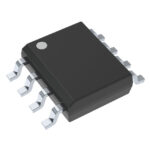 ADS1252U/2K5G4
The activity of extra discounts on wholesale prices is in full swing…
Please fill in your contact information and we will send you the latest wholesale price list.