 ChipApex | Global Electronic Components Supplier
SEARCH
Search Product
Search Post
— IC芯片 | 连接器 | 传感器 | 被动器件 —
Search productSearch post
— IC芯片 | 连接器 | 传感器 | 被动器件 —
Consult the customer manager about the wholesale price.
consultation hotline:86-132-6715-2157
email:[email protected]
Contact the product manager for consultation. One-stop consultation is available.
Do you want a lower wholesale price? Please send us your inquiry and we will reply immediately.
The ADS1258MRTCTEP is a 16-channel, 24-bit analog-to-digital converter (ADC) from Texas Instruments. It utilizes a delta-sigma architecture to deliver high precision with an effective number of bits (ENOB) of 21.6 and integral nonlinearity (INL) of 0.001% FSR. The device supports differential inputs at sampling rates up to 125 kS/s. It operates on a 4.75 V to 5.25 V analog supply and a 2.7 V to 5.25 V digital supply. The component is housed in a VQFN-48 package and functions within a temperature range of -55°C to +125°C.
Verify the specific suffix MRTCTEP against the manufacturer's official datasheet to confirm the exact packaging configuration and tape-and-reel specifications. Ensure compliance with export documentation requirements if shipping from the United States. Confirm that the military-grade temperature rating (-55°C to +125°C) aligns with the design environment before finalizing procurement orders.
Select this component when designing systems that require simultaneous multi-channel acquisition with high accuracy. The 24-bit resolution and low noise characteristics make it suitable for sensitive sensor interfaces. Verify that the SPI interface compatibility matches the host microcontroller. Consider the thermal management requirements associated with the specified power dissipation levels during continuous operation.
This part belongs to the ADS1258 series of precision ADCs. It shares core architectural features with other variants like the ADS1258IPHPREP but differs in package type and environmental rating. The EP designation indicates an enhanced product designed for extended lifecycle support and traceability, targeting critical applications in aerospace and defense sectors.
The ADS1258IRTCR is a verified industrial-grade alternative within the same family. Note that the IR version typically operates within a -40°C to +105°C range, which is narrower than the military-grade specification of the MRTCTEP variant. Package differences between VQFN and QFN may also impact PCB layout requirements.
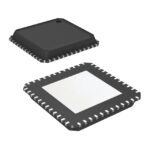 ADS1258MRTCTEP
The activity of extra discounts on wholesale prices is in full swing…
Please fill in your contact information and we will send you the latest wholesale price list.




