 ChipApex | Global Electronic Components Supplier
SEARCH
Search Product
Search Post
— IC芯片 | 连接器 | 传感器 | 被动器件 —
Search productSearch post
— IC芯片 | 连接器 | 传感器 | 被动器件 —
Consult the customer manager about the wholesale price.
consultation hotline:86-132-6715-2157
email:[email protected]
Contact the product manager for consultation. One-stop consultation is available.
Do you want a lower wholesale price? Please send us your inquiry and we will reply immediately.
The ADS127L11IRUKT is a 24-bit delta-sigma analog-to-digital converter (ADC) from Texas Instruments, housed in a 20-pin WQFN package measuring 3.00 mm × 3.00 mm. It supports data rates up to 400 kSPS with the wideband filter and up to 1067 kSPS with the low-latency filter. The device operates on an analog supply of 4.5 V to 5.5 V (high-speed mode) or 2.85 V to 5.5 V (low-speed mode), with a digital I/O supply of 1.65 V to 5.5 V. Key electrical specifications include a typical dynamic range of 111.5 dB at 200 kSPS, total harmonic distortion of –120 dB, and integral nonlinearity of 0.9 ppm of full scale. Power consumption is 18.6 mW in high-speed mode and 3.3 mW in low-speed mode.
Verify the specific ordering suffix IRUKT corresponds to the WQFN-20 package and tape-and-reel packaging configuration. Confirm that the component meets RoHS compliance standards as indicated in manufacturer documentation. Ensure compatibility with the required operating temperature range of –40°C to +125°C for the intended application environment.
Select this component when high-resolution 24-bit conversion is required alongside flexible data rate options. The power-scalable architecture allows optimization between speed and power consumption based on system needs. Consider the integrated buffers if minimizing external passive components is a priority. Verify that the available clock frequencies align with the desired output data rate and filter configuration.
The ADS127L11 belongs to Texas Instruments' family of high-performance delta-sigma ADCs designed for precision measurement applications. It shares architectural similarities with other devices in the series but offers specific trade-offs in power consumption and maximum sampling speed. The IRUKT designation identifies the specific surface-mount package variant suitable for compact PCB layouts.
Consult official Texas Instruments documentation for qualified replacement part numbers. Ensure any substitute maintains compatible pinout, voltage levels, and communication protocols. Verify that thermal characteristics and package dimensions match the existing design constraints.
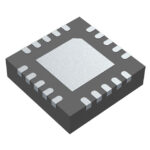 ADS127L11IRUKT
The activity of extra discounts on wholesale prices is in full swing…
Please fill in your contact information and we will send you the latest wholesale price list.





