 ChipApex | Global Electronic Components Supplier

SEARCH
Search Product
Search Post
— IC芯片 | 连接器 | 传感器 | 被动器件 —
Search productSearch post
— IC芯片 | 连接器 | 传感器 | 被动器件 —
Consult the customer manager about the wholesale price.
consultation hotline:86-132-6715-2157
email:[email protected]
Contact the product manager for consultation. One-stop consultation is available.
Do you want a lower wholesale price? Please send us your inquiry and we will reply immediately.
The ADT7421ARMZ-RL7 is a dual-channel digital thermometer and under/overtemperature alarm manufactured by onsemi. It features Beta Cancellation Technology for accurate measurement of small geometry CPU temperatures, with local accuracy of ±2.75°C and remote accuracy ranging from ±1.75°C to ±3.25°C. The device operates on a 3.0 V to 3.6 V supply, drawing up to 4.0 mA at maximum conversion rates. It provides 1°C resolution locally and 0.25°C remotely via a 2-Wire SMBus interface. The sensor supports switchable temperature ranges of 0°C to +125°C or -40°C to +125°C in an 8-lead MSOP package.
Verify component authenticity through authorized distribution channels. Confirm RoHS compliance status and lead-free packaging specifications prior to integration. Ensure storage conditions adhere to moisture sensitivity level requirements to prevent package damage during soldering.
Select this model when precise monitoring of embedded thermal transistors in modern processors is required. The integrated beta cancellation eliminates the need for external calibration. Verify that the system voltage remains within the 3.0 V to 3.6 V operational window.
This component belongs to the ADT7421 family of precision temperature sensors. It maintains pin and register compatibility with legacy devices such as the ADM1032 and ADT7461, facilitating direct upgrades in existing designs without schematic modifications.
Direct substitutes include the ADT7421ARMZ and ADT7421ARMZ-REEL. These variants share identical electrical characteristics and pinouts but differ only in reel packaging quantities rather than functional performance.
The device automatically cancels up to 50 Ohms of typical series resistance found on the D+ and D- inputs, removing the need for manual offset calibration.
The default SMBus address is 0x4C. An alternative address of 0x4D is available for the ADT7421-2 variant to support multiple devices on the same bus.
Yes, Pin 6 can be reconfigured via the Configuration Register to function as a second THERM output (THERM2) instead of an alert interrupt.
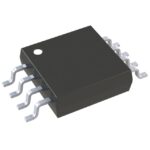 ADT7421ARMZ-RL7

The activity of extra discounts on wholesale prices is in full swing…
Please fill in your contact information and we will send you the latest wholesale price list.





