 ChipApex | Global Electronic Components Supplier

SEARCH
Search Product
Search Post
— IC芯片 | 连接器 | 传感器 | 被动器件 —
Search productSearch post
— IC芯片 | 连接器 | 传感器 | 被动器件 —
Consult the customer manager about the wholesale price.
consultation hotline:86-132-6715-2157
email:[email protected]
Contact the product manager for consultation. One-stop consultation is available.
Do you want a lower wholesale price? Please send us your inquiry and we will reply immediately.
The ADUM1200AR is a dual-channel digital isolator utilizing Analog Devices iCoupler technology, which integrates high-speed CMOS with monolithic transformer technology. It features 2/0 channel directionality and operates within a supply voltage range of 2.7 V to 5.5 V. The device supports data rates up to 25 Mbps (NRZ) with a typical propagation delay of 150 ns. It provides an isolation voltage of 2500 Vrms for one minute per UL1577 standards. The component is housed in a narrow-body SOIC-8 package and functions reliably across an operating temperature range from -40°C to +105°C.
Verify the specific suffix against official Analog Devices documentation to confirm packaging format and tape/reel specifications. Ensure the procurement source provides valid RoHS compliance certificates and original manufacturer traceability. Cross-reference the ordering part number with the latest datasheet revision to confirm pinout compatibility and regulatory approvals such as UL, CSA, and VDE recognition before finalizing purchase orders.
Select this component when designing circuits requiring robust galvanic isolation between digital domains without the degradation issues associated with optical coupling. It is suitable for applications demanding low power consumption at varying data rates and high common-mode noise rejection. Consider the SOIC-8 package constraints and thermal management requirements for operation at elevated temperatures up to 105°C.
This device belongs to the ADuM120x series of dual-channel digital isolators from Analog Devices. The series leverages proprietary iCoupler technology to replace traditional optocouplers, offering smaller form factors and better reliability. The ADUM1200AR specifically addresses the need for cost-effective, high-performance isolation in space-constrained designs requiring bidirectional data transfer.
Direct replacements include other variants within the ADuM120x family, such as the ADUM1200ARZ or ADUM1200BRZ, depending on required temperature grades and packaging options. Verify that substitute components maintain identical pinouts and electrical characteristics to ensure seamless integration into existing PCB layouts.
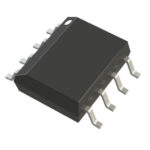 ADUM1200AR

The activity of extra discounts on wholesale prices is in full swing…
Please fill in your contact information and we will send you the latest wholesale price list.





