 ChipApex | Global Electronic Components Supplier

SEARCH
Search Product
Search Post
— IC芯片 | 连接器 | 传感器 | 被动器件 —
Search productSearch post
— IC芯片 | 连接器 | 传感器 | 被动器件 —
Consult the customer manager about the wholesale price.
consultation hotline:86-132-6715-2157
email:[email protected]
Contact the product manager for consultation. One-stop consultation is available.
Do you want a lower wholesale price? Please send us your inquiry and we will reply immediately.
The ADUM1234BRWZ-RL is a current-isolated half-bridge gate driver manufactured by Analog Devices Inc. It utilizes iCoupler technology to provide galvanic isolation between digital control circuits and power switches. The device operates within a supply voltage range of 2.7 V to 5.5 V and supports data rates up to 150 Mb/s. Key electrical parameters include an insulation voltage of 2500 Vrms, a propagation delay of 32 ns, and rise/fall times of 3 ns. It features bidirectional signal transmission and operates across a temperature range of -40°C to +105°C in a 16-pin SOIC package.
Verify component authenticity through authorized Analog Devices distributors or certified partners. Confirm lot traceability and RoHS compliance status prior to acquisition. Check for obsolescence notices or lifecycle changes as availability may be restricted. Ensure storage conditions meet moisture sensitivity level requirements to prevent package damage during soldering processes.
Select this component when high-speed isolation is required for half-bridge configurations. Consider the 16-pin SOIC package for board space constraints. Evaluate the 2500 Vrms insulation rating against system safety standards. Compare propagation delay specifications with other isolators if precise timing alignment is critical for the application design.
This part belongs to the ADuM123x series of isolated gate drivers from Analog Devices. It complements other devices in the ADuM family designed for power management applications. The series emphasizes compact size and high reliability compared to traditional optocoupler solutions. It serves as a modern alternative for designers seeking improved performance in isolated power stages.
Direct substitutes include the ADUM1234BRWZ variant which shares identical electrical characteristics but differs in packaging format. Verify pinout compatibility and insulation ratings when considering cross-references. Ensure that any replacement maintains the same iCoupler technology architecture for equivalent noise immunity.
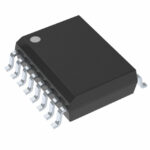 ADUM1234BRWZ-RL

The activity of extra discounts on wholesale prices is in full swing…
Please fill in your contact information and we will send you the latest wholesale price list.





