 ChipApex | Global Electronic Components Supplier

SEARCH
Search Product
Search Post
— IC芯片 | 连接器 | 传感器 | 被动器件 —
Search productSearch post
— IC芯片 | 连接器 | 传感器 | 被动器件 —
Consult the customer manager about the wholesale price.
consultation hotline:86-132-6715-2157
email:[email protected]
Contact the product manager for consultation. One-stop consultation is available.
Do you want a lower wholesale price? Please send us your inquiry and we will reply immediately.
The ADUM1241ARZ is a micropower, dual-channel digital isolator utilizing iCoupler magnetic coupling technology. It features bidirectional data transmission with default high directionality (1/1). Key electrical parameters include a data rate of 2 Mb/s, isolation voltage of 3750 Vrms, and common-mode transient immunity of 25 kV/µs. The device operates on a supply voltage range of 2.25 V to 3.6 V with a typical operating current of 306 µA per channel. Propagation delay is 180 ns maximum. It is housed in an 8-SOIC package and supports an operating temperature range from -40°C to +125°C.
Verify the specific suffix 'ARZ' confirms the SOIC-8 package and lead-free RoHS compliance. Confirm the manufacturer is Analog Devices Inc. Ensure the datasheet matches the 2 Mb/s data rate and 3750 Vrms isolation rating. Check for moisture sensitivity level requirements during storage and handling.
Select this component when bidirectional isolation with default high directionality is required. It is suitable for applications needing low power consumption and moderate data rates up to 2 Mb/s. Consider the 8-SOIC package constraints and the 2.25 V to 3.6 V supply voltage range. Verify that the 3750 Vrms isolation barrier meets system safety standards.
The ADUM1241ARZ belongs to the ADuM124x family of micropower digital isolators. This series includes variants like ADUM1240, ADUM1245, and ADUM1246, which differ primarily in channel directionality configurations. All share the same core iCoupler technology and physical footprint, allowing for design flexibility within isolated systems.
Direct substitutes within the same family include ADUM1240, ADUM1245, and ADUM1246, provided their specific channel directionality matches the design requirements. Cross-family replacements require verification of isolation voltage, data rate, and package compatibility.
The ADUM1241ARZ has a default high directionality, meaning both channels are configured as 1/1 (input on side 1, output on side 2).
It uses Analog Devices' iCoupler technology, which relies on magnetic coupling through on-chip transformers rather than optical or capacitive methods.
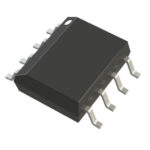 ADUM1241ARZ

The activity of extra discounts on wholesale prices is in full swing…
Please fill in your contact information and we will send you the latest wholesale price list.





