 ChipApex | Global Electronic Components Supplier

SEARCH
Search Product
Search Post
— IC芯片 | 连接器 | 传感器 | 被动器件 —
Search productSearch post
— IC芯片 | 连接器 | 传感器 | 被动器件 —
Consult the customer manager about the wholesale price.
consultation hotline:86-132-6715-2157
email:[email protected]
Contact the product manager for consultation. One-stop consultation is available.
Do you want a lower wholesale price? Please send us your inquiry and we will reply immediately.
The ADUM1280WBRZ-RL7 is a dual-channel digital isolator from Analog Devices, utilizing magnetic coupling technology for signal transmission across isolation barriers. It features bidirectional data flow with a maximum data rate of 100 Mb/s and an insulation voltage rating of 3000 Vrms. The device operates within a supply voltage range of 2.7 V to 5.5 V, consuming typical power supply currents of 9.5 mA and 20 mA depending on the channel state. Propagation delay is specified at 23 ns, with rise and fall times of 3 ns. It supports an operating temperature range from -40°C to +125°C and is housed in an SOIC-8 surface-mount package.
Verify component authenticity through authorized distributors or direct manufacturer channels. Confirm RoHS compliance status and check for specific packaging variants such as reel or cut tape options. Ensure the ordering suffix matches required specifications. Review datasheet revisions for any updates to electrical characteristics or recommended footprint layouts before finalizing procurement decisions.
Choose this model when bidirectional isolation is required alongside high data throughput capabilities. Consider the 3000 Vrms insulation rating for applications demanding enhanced safety margins. Evaluate power consumption profiles against system thermal constraints. Compare propagation delays with timing requirements of connected interfaces. Assess package compatibility with existing PCB layout designs.
This component belongs to the ADUM1280 series of small, low-power digital isolators. It shares architectural similarities with other members like the ADUM1280ARZ but differs in polarity configuration and speed grades. The series emphasizes compact size and reliable performance in space-constrained environments while maintaining strict isolation standards defined by industry regulations.
Direct substitutes include ADUM1280CRZ-RL7 for unidirectional high-speed needs. For lower speed requirements, consider ADUM1280ARZ-RL7. Cross-reference pinouts and electrical parameters carefully when swapping between different polarity configurations within the same family to ensure functional compatibility.
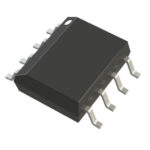 ADUM1280WBRZ-RL7

The activity of extra discounts on wholesale prices is in full swing…
Please fill in your contact information and we will send you the latest wholesale price list.







