 ChipApex | Global Electronic Components Supplier

SEARCH
Search Product
Search Post
— IC芯片 | 连接器 | 传感器 | 被动器件 —
Search productSearch post
— IC芯片 | 连接器 | 传感器 | 被动器件 —
Consult the customer manager about the wholesale price.
consultation hotline:86-132-6715-2157
email:[email protected]
Contact the product manager for consultation. One-stop consultation is available.
Do you want a lower wholesale price? Please send us your inquiry and we will reply immediately.
The ADUM1281WBRZ is a dual-channel digital isolator from Analog Devices, utilizing iCoupler magnetic coupling technology. It features two independent isolation channels with unidirectional signal transmission. The device supports data rates up to 100 Mb/s and provides an insulation voltage of 3000 Vrms. It operates within a supply voltage range of 3.135 V to 5.5 V. Key electrical parameters include a propagation delay of 23 ns and a working supply current of approximately 15 mA per channel. The component is qualified under AEC-Q100 standards for automotive applications and functions reliably across an operating temperature range of -40°C to +125°C.
Verify the specific suffix 'W' indicates wide body packaging and 'B' denotes the commercial grade variant when sourcing. Confirm AEC-Q100 qualification status if automotive reliability is required. Check moisture sensitivity levels and reflow soldering profiles against IPC/JEDEC standards. Ensure the supplier provides valid RoHS compliance documentation. Validate that the package type matches the PCB footprint requirements for SOIC-8 wide body.
Select this component for designs requiring bidirectional data transfer across two isolated channels with moderate speed requirements. Consider the 3000 Vrms isolation barrier for safety-critical applications. Evaluate the 100 Mb/s data rate against system timing constraints. Compare power consumption against other isolators if energy efficiency is a primary design driver. Ensure the operating temperature range meets the environmental conditions of the target application.
This part belongs to the ADUM1281 series of dual-channel digital isolators. It is part of Analog Devices' iCoupler product family, which replaces optical isolation with silicon-based magnetic coupling. The series offers various speed and isolation voltage options to suit different interface needs. The WBRZ suffix specifies the package style and temperature grade within this lineup.
ADUM1281BRZ
The device supports data rates up to 100 Mb/s.
Yes, it is qualified under the AEC-Q100 standard for automotive use.
Yes, the independent channels allow for voltage translation between isolated domains.
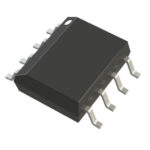 ADUM1281WBRZ

The activity of extra discounts on wholesale prices is in full swing…
Please fill in your contact information and we will send you the latest wholesale price list.






