 ChipApex | Global Electronic Components Supplier

SEARCH
Search Product
Search Post
— IC芯片 | 连接器 | 传感器 | 被动器件 —
Search productSearch post
— IC芯片 | 连接器 | 传感器 | 被动器件 —
Consult the customer manager about the wholesale price.
consultation hotline:86-132-6715-2157
email:[email protected]
Contact the product manager for consultation. One-stop consultation is available.
Do you want a lower wholesale price? Please send us your inquiry and we will reply immediately.
The ADUM1300CRWZ is a triple-channel digital isolator utilizing Analog Devices iCoupler technology, which integrates high-speed CMOS circuitry with monolithic transformer isolation on a single silicon chip. It provides unidirectional signal transmission with a data rate of 90 Mb/s and supports up to 120 Mb/s peak data rates. The device operates within a supply voltage range of 2.7 V to 5.5 V and offers an insulation voltage of 2500 Vrms. Key electrical parameters include a propagation delay of 27 ns, a pulse width distortion of less than 3 ns, and common-mode transient immunity of 25 kV/µs. It functions reliably across an operating temperature range from -40°C to +105°C.
Verify the specific suffix (e.g., CRWZ vs. CRW) to ensure correct packaging and lead-free status. Confirm that the required isolation voltage rating meets system safety standards. Check for RoHS compliance documentation if environmental regulations apply. Ensure the unidirectional nature aligns with bidirectional communication needs, as this part does not support reverse data flow.
Select this component when three isolated channels are required for unidirectional data transfer. It is suitable for applications demanding moderate speed up to 90 Mb/s with high noise immunity. Consider the 16-SOIC package constraints for PCB layout. Compare against dual-channel variants if fewer channels suffice, or higher-speed models if data rates exceed 120 Mb/s requirements.
The ADUM1300 belongs to the ADuM1300 series of general-purpose digital isolators from Analog Devices. This family leverages iCoupler technology to replace traditional optocouplers, offering superior performance in terms of speed, power efficiency, and size. The series includes variants with different channel counts and polarity options to address diverse interface isolation needs in industrial and consumer markets.
Direct substitutes include other ADuM1300 series variants such as the ADUM1301CRWZ, which shares similar specifications but may differ in pinout or internal configuration. Verify compatibility with existing PCB footprints and firmware logic when transitioning between isolator families.
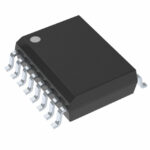 ADUM1300CRWZ

The activity of extra discounts on wholesale prices is in full swing…
Please fill in your contact information and we will send you the latest wholesale price list.







