 ChipApex | Global Electronic Components Supplier

SEARCH
Search Product
Search Post
— IC芯片 | 连接器 | 传感器 | 被动器件 —
Search productSearch post
— IC芯片 | 连接器 | 传感器 | 被动器件 —
Consult the customer manager about the wholesale price.
consultation hotline:86-132-6715-2157
email:[email protected]
Contact the product manager for consultation. One-stop consultation is available.
Do you want a lower wholesale price? Please send us your inquiry and we will reply immediately.
The ADUM1300WSRWZ55 is a triple-channel digital isolator from Analog Devices, designed for robust signal transmission across isolation barriers. It operates within a supply voltage range of 3V to 5.5V and supports data rates up to 10 Mbps. The device features a propagation delay of 32 ns and offers high common-mode transient immunity of 25 kV/µs. Packaged in a 16-SOIC format, it provides 2500 Vrms isolation capability. This component is qualified under AEC-Q100 standards, ensuring reliability for automotive applications across an operating temperature range of -40°C to +125°C.
Verify the specific suffix '55' against official Analog Devices documentation to confirm exact pinout, packaging, and functional specifications. Ensure compatibility with existing design constraints before procurement. Cross-reference with current product availability status as manufacturing statuses may change. Confirm that the component meets all required automotive and industrial standards for your specific application environment.
Select this component when triple-channel isolation with high-speed data transmission is required. Consider its automotive qualification for harsh environmental conditions. Evaluate the 10 Mbps data rate against system timing requirements. Assess the 2500 Vrms isolation voltage for safety compliance. Compare power consumption characteristics with other isolators if energy efficiency is critical.
The ADUM1300 series represents Analog Devices' iCoupler technology, utilizing magnetic coupling for digital isolation. This family includes various channel configurations and speed options. The WSRWZ55 variant specifically targets automotive and industrial markets with enhanced reliability features. It complements other interface solutions like the ADUM1400 series for different channel counts.
Public confirmed substitute part numbers include ADUM1300WTRWZ and ADUM1300WTRWZ-RL. These alternatives offer parameter-equivalent performance. Verify package compatibility and electrical specifications before substitution. Check for any differences in manufacturing status or regional availability.
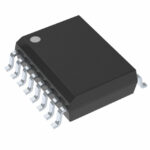 ADUM1300WSRWZ55

The activity of extra discounts on wholesale prices is in full swing…
Please fill in your contact information and we will send you the latest wholesale price list.





