 ChipApex | Global Electronic Components Supplier

SEARCH
Search Product
Search Post
— IC芯片 | 连接器 | 传感器 | 被动器件 —
Search productSearch post
— IC芯片 | 连接器 | 传感器 | 被动器件 —
Consult the customer manager about the wholesale price.
consultation hotline:86-132-6715-2157
email:[email protected]
Contact the product manager for consultation. One-stop consultation is available.
Do you want a lower wholesale price? Please send us your inquiry and we will reply immediately.
The ADUM1300WTRWZ53-RL is a general-purpose digital isolator from Analog Devices Inc., featuring three independent channels within a 16-lead SOIC package. It utilizes iCoupler magnetic coupling technology to provide electrical isolation with a rated insulation voltage of 2500 Vrms. The device supports data rates up to 10 Mbps and offers a common-mode transient immunity (CMTI) of 25 kV/µs. Operating supply voltages range from 2.7 V to 5.5 V, with a typical operating current of 57 mA per channel. It functions reliably across an extended temperature range from -40°C to +125°C and meets AEC-Q100 automotive qualification standards.
Verify the specific suffix WTRWZ53 against official Analog Devices documentation to confirm pinout and specification alignment, as suffixes often denote packaging or regional variants. Confirm availability status directly with authorized distributors, as lifecycle changes may affect stock levels. Ensure the procurement source provides valid traceability and authenticity guarantees for automotive-grade components.
Select this component when three isolated channels are required for bidirectional data transfer in automotive or industrial settings. Compare propagation delay and power consumption against alternative isolators if low-latency performance is critical. Verify that the 2500 Vrms isolation rating meets the safety requirements of the target application's regulatory standards.
This part belongs to the ADUM1300 series of iCoupler digital isolators, designed for robust signal transmission across isolation barriers. The series integrates passive components on-chip to reduce external circuit complexity. The ADUM1300 family is widely used in applications requiring reliable isolation between microcontrollers and peripheral devices in electrically noisy environments.
Publicly confirmed parameter-equivalent substitutes include ADUM1300WTRWZ and ADUM1300WTRWZ-RL. These alternatives share identical functional specifications and pinouts. Verify package compatibility and lead time differences before substitution.
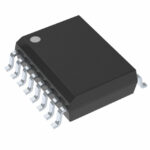 ADUM1300WTRWZ53-RL

The activity of extra discounts on wholesale prices is in full swing…
Please fill in your contact information and we will send you the latest wholesale price list.





