 ChipApex | Global Electronic Components Supplier

SEARCH
Search Product
Search Post
— IC芯片 | 连接器 | 传感器 | 被动器件 —
Search productSearch post
— IC芯片 | 连接器 | 传感器 | 被动器件 —
Consult the customer manager about the wholesale price.
consultation hotline:86-132-6715-2157
email:[email protected]
Contact the product manager for consultation. One-stop consultation is available.
Do you want a lower wholesale price? Please send us your inquiry and we will reply immediately.
The ADUM1301WTRWZ53-RL is a general-purpose digital isolator from Analog Devices, utilizing iCoupler magnetic coupling technology. It features three independent channels configured as two transmitters and one receiver within a 16-pin SOIC package. The device supports data rates up to 10 Mbps with a maximum propagation delay of 32 ns. It operates on a supply voltage range of 2.7 V to 5.5 V and provides an isolation voltage of 2500 Vrms. The component exhibits a common-mode transient immunity of 25 kV/µs and is qualified under AEC-Q100 standards for automotive applications.
Verify the specific suffix '53' against official Analog Devices documentation to confirm pinout or revision differences compared to standard variants. Ensure compatibility with existing PCB footprints and reflow soldering profiles. Confirm availability status through authorized distributors as supply constraints may apply. Validate that the reel packaging meets storage and handling requirements for moisture-sensitive devices.
Select this component when high-speed digital isolation is required alongside automotive qualification standards. The 10 Mbps data rate suits most industrial and automotive communication protocols. Consider the 16-SOIC package dimensions for board space constraints. Evaluate power consumption at 29 mA and 43 mA operating currents against system energy budgets. Ensure input/output logic levels match the 2.7 V to 5.5 V supply range.
This part belongs to the ADUM1301 series of iCoupler digital isolators. It shares architectural similarities with other members like the ADUM1301ARWZ-RL but differs in specific manufacturing revisions or packaging configurations indicated by the suffix. The series is designed for robust performance in noisy electrical environments where traditional optocouplers might fail due to aging or limited common-mode rejection.
Direct substitutes include other ADUM1301 variants such as ADUM1301ARWZ-RL, provided the functional specifications and package dimensions are identical. Verify that any replacement maintains the same AEC-Q100 qualification level if used in automotive applications. Check for any changes in propagation delay or power consumption that might impact timing-critical designs.
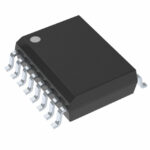 ADUM1301WTRWZ53-RL

The activity of extra discounts on wholesale prices is in full swing…
Please fill in your contact information and we will send you the latest wholesale price list.





