 ChipApex | Global Electronic Components Supplier
SEARCH
Search Product
Search Post
— IC芯片 | 连接器 | 传感器 | 被动器件 —
Search productSearch post
— IC芯片 | 连接器 | 传感器 | 被动器件 —
Consult the customer manager about the wholesale price.
consultation hotline:86-132-6715-2157
email:[email protected]
Contact the product manager for consultation. One-stop consultation is available.
Do you want a lower wholesale price? Please send us your inquiry and we will reply immediately.
The ADUM3221BRZ is an isolated, dual-channel gate driver utilizing iCoupler technology. It provides a peak output current of 4 A with rise and fall times of 22 ns. The device operates on a supply voltage range of 3 V to 18 V and features a nominal undervoltage lockout (UVLO) of 7 V. It offers 2.5 kVrms insulation voltage and functions within a temperature range of -40°C to +125°C. Packaged in an 8-pin SOIC, it integrates protection against transients, overvoltage, thermal events, and undervoltage conditions.
Verify the specific suffix 'RZ' corresponds to the tube packaging variant rather than reel options like RL7. Confirm RoHS compliance status through official Analog Devices documentation prior to integration. Ensure the 8-pin SOIC footprint matches the target PCB layout constraints. Validate that the 2.5 kVrms isolation rating meets the safety requirements of the end application environment.
Select this component when a dual-channel solution with 4 A peak drive strength is required. The 2.5 kVrms isolation rating suits applications demanding moderate galvanic separation. Consider the 3 V to 18 V supply range compatibility with standard logic levels. Evaluate the 22 ns propagation characteristics against switching frequency requirements. Compare against other ADuM322x variants if different isolation voltages or channel counts are needed.
This part belongs to the ADuM322x family of isolated gate drivers from Analog Devices. These devices leverage proprietary iCoupler technology to replace traditional optocouplers and transformers. The series is designed for robust performance in noisy industrial environments. The BRZ suffix indicates a specific package and compliance configuration within the broader product line.
The ADUM3223ARZ is a documented related variant within the same family offering similar isolation and drive capabilities. Verify pinout compatibility and specific electrical parameter differences before substitution. Consult official Analog Devices documentation for detailed cross-reference data.
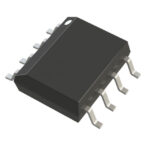 ADUM3221BRZ
The activity of extra discounts on wholesale prices is in full swing…
Please fill in your contact information and we will send you the latest wholesale price list.





