 ChipApex | Global Electronic Components Supplier

SEARCH
Search Product
Search Post
— IC芯片 | 连接器 | 传感器 | 被动器件 —
Search productSearch post
— IC芯片 | 连接器 | 传感器 | 被动器件 —
Consult the customer manager about the wholesale price.
consultation hotline:86-132-6715-2157
email:[email protected]
Contact the product manager for consultation. One-stop consultation is available.
Do you want a lower wholesale price? Please send us your inquiry and we will reply immediately.
The ADV202BBCZ-135 is a single-chip JPEG2000 video codec manufactured by Analog Devices Inc. It implements the computationally intensive operations of the ISO/IEC 15444-1 standard for both compression and decompression. The device features a dedicated wavelet transform engine supporting 9/7 and 5/3 transforms with up to six levels, three entropy codecs, an embedded RISC processor, and on-board memory. It supports tile/image widths up to 4096 pixels in single-component mode or 2048 pixels in 4:2:2 interleaved mode. The chip operates at a maximum clock frequency of 135 MHz and utilizes a flexible asynchronous SRAM-style host interface.
Verify the specific speed grade suffix matches the required operational frequency before procurement. Confirm package dimensions against the design footprint requirements. Ensure supply voltage levels align with the specified core and I/O ranges. Check for any recent product change notices that may affect pin compatibility or thermal characteristics.
Select this component when a complete JPEG2000 solution is needed for video and high bandwidth image compression. Consider the 135 MHz speed grade for applications requiring higher processing throughput compared to lower speed variants. Evaluate the available on-board memory and DMA capabilities to determine if external memory interfaces are necessary for the target application frame rates.
The ADV202 series includes variants with different speed grades and package sizes. The -135 suffix denotes the 135 MHz speed grade housed in a 13 mm × 13 mm 144-lead CSPBGA package. Other variants include the 115 MHz and 150 MHz speeds, which may utilize different package footprints or thermal profiles. All variants share the same functional architecture and JPEG2000 feature set.
Direct replacements within the ADV202 family include the ADV202BBCZ-115 and ADV202BBCZ-150. Verify package compatibility as the -115 variant uses a 121-lead CSPBGA while the -150 uses a 144-lead CSPBGA like the -135. Ensure the host system can accommodate the specific timing requirements of the selected speed grade.
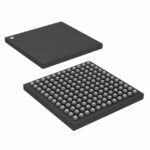 ADV202BBCZ-135

The activity of extra discounts on wholesale prices is in full swing…
Please fill in your contact information and we will send you the latest wholesale price list.





