 ChipApex | Global Electronic Components Supplier

SEARCH
Search Product
Search Post
— IC芯片 | 连接器 | 传感器 | 被动器件 —
Search productSearch post
— IC芯片 | 连接器 | 传感器 | 被动器件 —
Consult the customer manager about the wholesale price.
consultation hotline:86-132-6715-2157
email:[email protected]
Contact the product manager for consultation. One-stop consultation is available.
Do you want a lower wholesale price? Please send us your inquiry and we will reply immediately.
The ADV3225ACPZ is a high-speed analog crosspoint switch featuring a 16 × 8 nonblocking matrix. It operates on ±5 V supplies and includes eight independent output buffers with a fixed gain of +2. The device supports serial or parallel programming for channel switching. Key performance metrics include a −3 dB bandwidth of 850 MHz at 2 V p-p, a slew rate of 2500 V/µs, and a propagation delay of 0.6 ns. It functions within an extended industrial temperature range of −40°C to +85°C.
Verify the specific package marking and date code against the manufacturer's latest documentation before integration. Confirm that the supply voltage rails strictly adhere to the specified ±5 V limits to ensure reliable operation within the stated thermal and electrical boundaries.
Select the ADV3225ACPZ when a gain of +2 is required for the output stage. For applications requiring unity gain, consider the equivalent ADV3224 variant. Ensure the design accommodates the 72-lead LFCSP footprint and provides adequate thermal management for the exposed paddle connection.
This component belongs to the ADV3224/ADV3225 series of high-speed analog crosspoint switches. It is functionally equivalent to the AD8110/AD8111 and serves as a drop-in compatible replacement for the ADV3228/ADV3229 8 × 8 arrays, facilitating system upgrades without major layout changes.
The ADV3224ACPZ is the direct functional substitute offering identical pinout and specifications with a gain of +1 instead of +2. Designers must verify if the circuit requires the specific amplification provided by the ADV3225 or if the unity gain of the ADV3224 is sufficient.
Yes, the eight output buffers can be placed into a high-impedance state to minimize on-chip power dissipation and prevent off channels from loading the output bus.
The device is designed to drive loads down to 100 Ω, provided that the internal junction temperature limits are not exceeded during operation.
Channel switching is performed via a serial digital control interface that allows daisy-chaining, or via a parallel control interface for updating individual outputs without reprogramming the entire array.
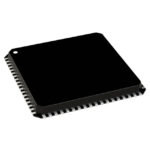 ADV3225ACPZ

The activity of extra discounts on wholesale prices is in full swing…
Please fill in your contact information and we will send you the latest wholesale price list.





