 ChipApex | Global Electronic Components Supplier

SEARCH
Search Product
Search Post
— IC芯片 | 连接器 | 传感器 | 被动器件 —
Search productSearch post
— IC芯片 | 连接器 | 传感器 | 被动器件 —
Consult the customer manager about the wholesale price.
consultation hotline:86-132-6715-2157
email:[email protected]
Contact the product manager for consultation. One-stop consultation is available.
Do you want a lower wholesale price? Please send us your inquiry and we will reply immediately.
The ADV3229ACPZ is an 8 × 8 high-speed analog crosspoint switch matrix manufactured by Analog Devices Inc. It features eight independent output buffers with a fixed gain of +2, designed to drive 150 Ω loads. The device operates on ±5 V supplies and supports both serial and parallel programming interfaces for the switch array. It provides a −3 dB large signal bandwidth of 900 MHz at 200 mV p-p and 850 MHz at 2 V p-p, with a slew rate of 2500 V/µs. The component is housed in a 72-lead LFCSP (10 mm × 10 mm) package and functions within an operating temperature range of −40°C to +85°C.
Verify the specific ordering suffix against official manufacturer documentation to confirm package type and temperature grade. Ensure that the procurement channel sources components directly from authorized distributors to maintain quality assurance. Confirm RoHS compliance status prior to finalizing orders. Cross-reference the part number with current datasheet revisions to validate technical specifications.
Select the ADV3229ACPZ when a voltage gain of +2 is required for the crosspoint switching application. This model is functionally equivalent to the ADV3228 except for the internal amplifier gain configuration. Verify that the system design accommodates the specific power dissipation limits associated with driving low impedance loads. Ensure the control logic supports either the serial or parallel programming modes defined in the datasheet.
This component belongs to the ADV3228/ADV3229 series of high-speed analog crosspoint switches. It serves as a drop-in replacement for the AD8108/AD8109 family and is pinout compatible with the ADV3224/ADV3225 arrays. The device is designed to facilitate the construction of larger multicast-capable switch matrices by allowing multiple units to be bussed together via their high-impedance disabled outputs.
The ADV3228ACPZ is a direct functional substitute differing only in amplifier gain (+1 vs +2). The AD8108 and AD8109 are pin-compatible equivalents. Designers must verify that the system signal levels accommodate the gain difference if substituting between these models.
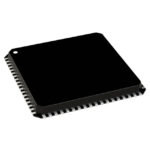 ADV3229ACPZ

The activity of extra discounts on wholesale prices is in full swing…
Please fill in your contact information and we will send you the latest wholesale price list.





