 ChipApex | Global Electronic Components Supplier
SEARCH
Search Product
Search Post
— IC芯片 | 连接器 | 传感器 | 被动器件 —
Search productSearch post
— IC芯片 | 连接器 | 传感器 | 被动器件 —
Consult the customer manager about the wholesale price.
consultation hotline:86-132-6715-2157
email:[email protected]
Contact the product manager for consultation. One-stop consultation is available.
Do you want a lower wholesale price? Please send us your inquiry and we will reply immediately.
The ADV7179WBCPZ is a chip-scale PAL/NTSC video encoder that converts digital CCIR-601 4:2:2 YCrCb data into analog baseband television signals. It features high-quality 10-bit video DACs, an integrated SSAF™ filter, and advanced power management for single-supply 2.8 V or 3.3 V operation. The device supports multiple video standards including NTSC M, PAL N2, and PAL B/D/G/H/I/M/N/60. It accepts a 27 MHz clock for standard operation or specific frequencies for square pixel mode. Key capabilities include programmable luma/chroma filters, CGMS/WSS generation, closed captioning support, and a teletext insertion port. Output configurations include composite, S-video, RGB (SCART), and YPbPr.
Verify the exact ordering suffix against the manufacturer's current datasheet to confirm package type and temperature range specifications. Ensure compatibility with system voltage requirements, as the device supports both 2.8 V and 3.3 V supplies with distinct operating ranges. Confirm automotive qualification status if required for the specific application environment.
Select this model when a compact solution for converting digital component video to analog broadcast formats is needed. It is suitable for designs requiring low power consumption through sleep modes and flexible output configurations. Consider the ADV7174 variant if Macrovision copy protection functionality is explicitly required, as it is not included in the ADV7179.
This component belongs to the ADV7174/ADV7179 family of video encoders from Analog Devices. It shares the same core architecture, pinout, and functional block diagram with the ADV7174. The primary distinction lies in feature inclusion; the ADV7179 omits the licensed Macrovision anti-copy processing found in the ADV7174, offering a simplified option for markets where such protection is unnecessary.
The ADV7174 is a direct functional substitute within the same package and pinout configuration. Selection between these two depends solely on the requirement for Macrovision licensing integration. No other electrical or interface differences exist between the models.
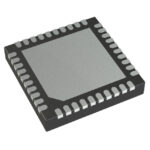 ADV7179WBCPZ
The activity of extra discounts on wholesale prices is in full swing…
Please fill in your contact information and we will send you the latest wholesale price list.





