 ChipApex | Global Electronic Components Supplier
SEARCH
Search Product
Search Post
— IC芯片 | 连接器 | 传感器 | 被动器件 —
Search productSearch post
— IC芯片 | 连接器 | 传感器 | 被动器件 —
Consult the customer manager about the wholesale price.
consultation hotline:86-132-6715-2157
email:[email protected]
Contact the product manager for consultation. One-stop consultation is available.
Do you want a lower wholesale price? Please send us your inquiry and we will reply immediately.
The ADV7197KSZ is a multiformat HDTV encoder featuring three 11-bit digital-to-analog converters (DACs) in a 52-lead MQFP package. It accepts 10-bit YCrCb or RGB data in 4:2:2 or 4:4:4 formats at clock frequencies of 74.25 MHz or 74.1758 MHz. The device outputs analog YPrPb compliant with EIA-770.3 or RGB levels per RS-170/RS-343A standards. Operating on a single 5 V or 3.3 V supply, it draws 102 mA at 5 V and 46 mA at 3.3 V with all DACs active. Key specifications include an integral nonlinearity of 1.5 LSB, differential nonlinearity of 0.9 to 2.0 LSB, and a luma bandwidth of 13.5 MHz.
Verify the specific suffix 'KSZ' against official Analog Devices documentation to confirm temperature range and packaging details. Ensure compatibility with the required 52-lead MQFP footprint and validate power supply requirements for the target operating voltage before integration.
Select this component when designing systems requiring simultaneous conversion of high-definition video signals to analog YPrPb or RGB outputs. Consider the 11-bit resolution and low differential nonlinearity for applications demanding high image fidelity. Verify that the host processor supports the necessary I2C interface and pixel clock frequencies for proper synchronization.
The ADV7197 belongs to Analog Devices' family of high-speed video encoders designed for professional broadcast and display applications. It serves as a bridge between digital video sources and analog display interfaces, enabling the reconstruction of high-definition signals from digital bitstreams.
Consult official Analog Devices documentation for confirmed substitute part numbers. Do not assume functional equivalence with other video encoder models without verifying pinout, electrical specifications, and register compatibility.
The device accepts 10-bit YCrCb in 4:2:2 or 4:4:4 format, and 10-bit RGB in 4:4:4 format.
Output levels are selected via Mode Register 0 to comply with either EIA-770.3 (YPrPb) or RS-170/RS-343A (RGB) standards.
The ALSB pin controls the I2C filter; setting it high reduces input bandwidth for noise reduction, while setting it low increases bandwidth for high-speed transfers.
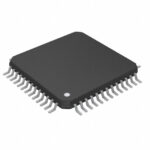 ADV7197KSZ
The activity of extra discounts on wholesale prices is in full swing…
Please fill in your contact information and we will send you the latest wholesale price list.





