 ChipApex | Global Electronic Components Supplier
SEARCH
Search Product
Search Post
— IC芯片 | 连接器 | 传感器 | 被动器件 —
Search productSearch post
— IC芯片 | 连接器 | 传感器 | 被动器件 —
Consult the customer manager about the wholesale price.
consultation hotline:86-132-6715-2157
email:[email protected]
Contact the product manager for consultation. One-stop consultation is available.
Do you want a lower wholesale price? Please send us your inquiry and we will reply immediately.
The ADV7305AKST is a multiformat SD, progressive scan, and HDTV video encoder manufactured by Analog Devices Inc. It integrates six NSV™ 14-bit digital-to-analog converters (DACs) on a single monolithic chip. The device supports simultaneous standard definition and high definition inputs and outputs with oversampling capabilities at 108 MHz or 148.5 MHz. It accepts parallel input data formats including CCIR-656, CCIR-601, and RGB 4:4:4. The component operates on dual I/O supplies of 2.5 V and 3.3 V, features an onboard voltage reference and PLL, and utilizes a 2-Wire serial MPU interface for control. It is housed in a 64-pin LQFP package.
Verify the specific ordering suffix AKST corresponds to the Plastic Quad Flatpack ST-64B package option when sourcing components. Confirm that the device meets lead-free manufacturing requirements and withstands surface-mount soldering temperatures up to 255°C. Ensure proper electrostatic discharge precautions are implemented during handling due to device sensitivity.
Select the ADV7305AKST for applications requiring multiformat video encoding with integrated 14-bit DACs. This model is suitable for designs needing simultaneous SD and HD support with programmable color matrices. Verify compatibility with 2.5 V and 3.3 V power supply rails and ensure the system architecture supports the required 2-Wire serial interface configuration.
The ADV7305AKST belongs to the ADV7304A/ADV7305A family of multiformat video encoders from Analog Devices. These devices are designed for high-speed digital-to-analog conversion in professional and consumer video applications. The family shares core functionalities such as NSV technology and multiformat support, differing primarily in specific feature sets like Macrovision implementation.
The ADV7304AKST is a related part within the same family. Note that the ADV7304A includes Macrovision Rev 1.0 and CGMS-A features which may not be present in the ADV7305A. Verify functional equivalence regarding copy protection standards before substitution.
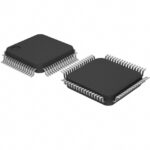 ADV7305AKST
The activity of extra discounts on wholesale prices is in full swing…
Please fill in your contact information and we will send you the latest wholesale price list.







