 ChipApex | Global Electronic Components Supplier
SEARCH
Search Product
Search Post
— IC芯片 | 连接器 | 传感器 | 被动器件 —
Search productSearch post
— IC芯片 | 连接器 | 传感器 | 被动器件 —
Consult the customer manager about the wholesale price.
consultation hotline:86-132-6715-2157
email:[email protected]
Contact the product manager for consultation. One-stop consultation is available.
Do you want a lower wholesale price? Please send us your inquiry and we will reply immediately.
The ADVFC32KNZ is a monolithic voltage-to-frequency and frequency-to-voltage converter manufactured by Analog Devices Inc. It operates with a maximum full-scale frequency of 500 kHz and offers high linearity, specified at ±0.01% max error at 10 kHz and ±0.05% max error at 100 kHz. The device supports a six-decade dynamic range and accepts both voltage and current inputs. It features an open-collector output compatible with TTL or CMOS logic levels, allowing pull-up voltages up to 30 V. The component is housed in a 14-lead plastic DIP package.
Verify the specific temperature grade and package configuration required for the application. The KN suffix denotes the commercial grade plastic DIP variant. Confirm availability status as distribution channels may list discontinued or limited stock items. Ensure proper ESD precautions are observed during handling due to device sensitivity. Cross-reference ordering guides for MIL-STD-883 compliant versions if military specifications are mandatory.
Select components with low temperature coefficients for RIN and C1 to maintain overall temperature stability. The integration capacitor value does not critically affect linearity or drift. Consider the input impedance requirements; negative voltage inputs require high impedance sources. Evaluate the need for offset trimming circuits if precise zero calibration is necessary across temperature ranges. Ensure power supply decoupling is implemented close to the device pins.
The ADVFC32 series includes variants such as the ADVFC32BH and ADVFC32SH, which offer wider operating temperature ranges in hermetically sealed TO-100 packages. The ADVFC32KNZ represents the commercial grade option in a standard plastic DIP format. All variants share the same core functionality and pinout, differing primarily in environmental ratings and construction materials.
The datasheet identifies the ADVFC32 as a pin-for-pin replacement for VFC32 devices from other manufacturers. Verify electrical compatibility with legacy designs before substitution.
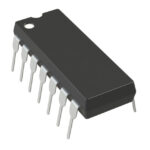 ADVFC32KNZ
The activity of extra discounts on wholesale prices is in full swing…
Please fill in your contact information and we will send you the latest wholesale price list.





