ChipApex | Global Electronic Components Supplier
SEARCH
Search Product
Search Post
— IC芯片 | 连接器 | 传感器 | 被动器件 —
Search productSearch post
— IC芯片 | 连接器 | 传感器 | 被动器件 —
Consult the customer manager about the wholesale price.
consultation hotline:86-132-6715-2157
email:[email protected]
Contact the product manager for consultation. One-stop consultation is available.
Do you want a lower wholesale price? Please send us your inquiry and we will reply immediately.
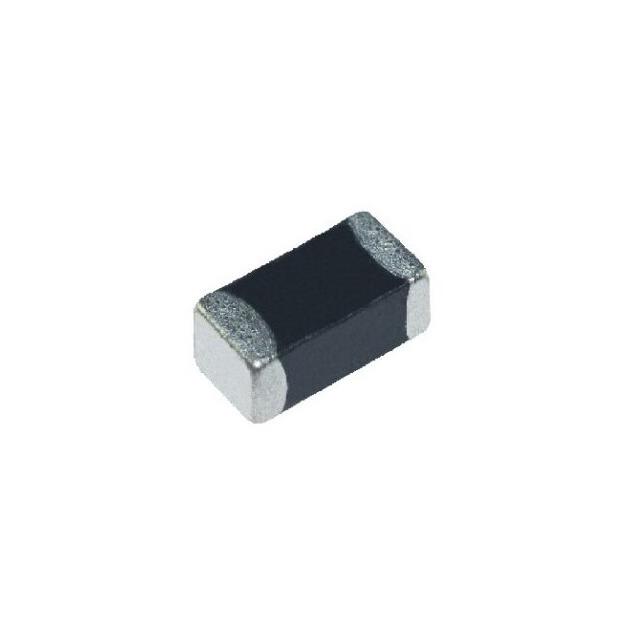
The AFBC-Q0402-102-T is a surface-mount ferrite bead from the Abracon AFBC-Q series, designed for high-frequency noise suppression in compact electronic circuits. It features a 0402 (1005 metric) package with dimensions of 1 mm length, 0.5 mm width, and 0.5 mm height. The component provides an impedance of 1 kOhms at its rated frequency, with a maximum DC resistance of 1.2 Ohms and a tolerance of 25%. It supports a maximum DC current of 50 mA and operates within a temperature range of -55°C to +150°C. The device is qualified under AEC-Q200 standards for automotive reliability.
Verify the specific suffix 'T' indicates tape-and-reel packaging when ordering. Confirm AEC-Q200 qualification status is required for your specific automotive application tier. Ensure the 50 mA current rating aligns with your circuit's peak load requirements to prevent saturation. Check RoHS compliance documentation for environmental regulations relevant to your manufacturing region.
Select this component when space constraints require a 0402 footprint but higher thermal endurance than standard commercial parts is needed. The 1 kOhm impedance offers effective attenuation for specific high-frequency noise profiles. Consider the 1.2 Ohm DCR impact on signal integrity if placed in low-voltage power lines. The wide operating temperature range makes it suitable for harsh environments where standard beads might fail.
This part belongs to the Abracon AFBC-Q series, which focuses on qualified ferrite beads for demanding applications. The series utilizes stable ferrite materials to maintain performance across varying temperatures. The Q-series designation typically denotes automotive-grade qualification, distinguishing these components from general-purpose industrial or commercial ferrite beads offered by the manufacturer.
Direct substitutes must match the 0402 package, 1 kOhm impedance, and 50 mA current rating. Verify that any replacement also holds AEC-Q200 certification if used in automotive contexts. Compare DC resistance values to ensure similar insertion loss characteristics. Ensure the substitute material maintains stability up to 150°C.
 AFBC-Q0402-102-T
The activity of extra discounts on wholesale prices is in full swing…
Please fill in your contact information and we will send you the latest wholesale price list.