ChipApex | Global Electronic Components Supplier
SEARCH
Search Product
Search Post
— IC芯片 | 连接器 | 传感器 | 被动器件 —
Search productSearch post
— IC芯片 | 连接器 | 传感器 | 被动器件 —
Consult the customer manager about the wholesale price.
consultation hotline:86-132-6715-2157
email:[email protected]
Contact the product manager for consultation. One-stop consultation is available.
Do you want a lower wholesale price? Please send us your inquiry and we will reply immediately.
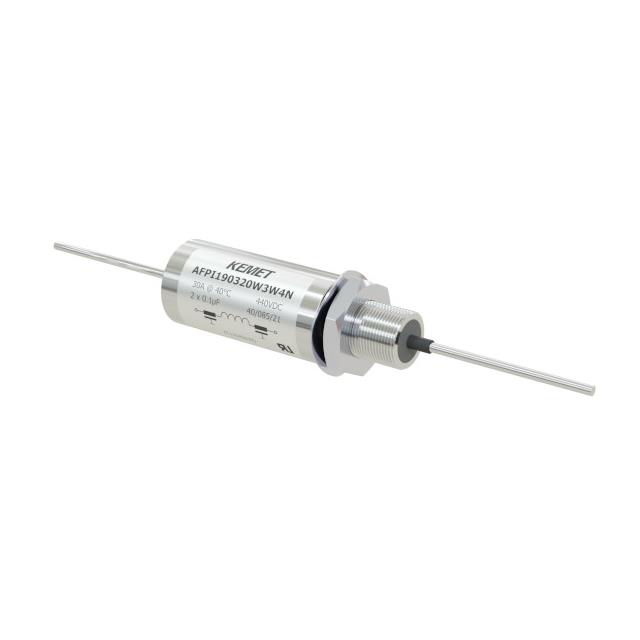
The KEMET AFPI190410V6C3S is a feed-through capacitor designed for high-frequency noise suppression. It features a capacitance of 0.5 µF and supports a continuous current of 6 A. The device is rated for 250 VAC with a maximum DC voltage of 10 V. It exhibits a low impedance characteristic, specified as 15 mOhm resistance. The component utilizes an axial bushing configuration with hooked leads, facilitating direct panel or chassis mounting for effective electromagnetic interference filtering in power line applications.
Verify the specific lead time and availability status with authorized distributors prior to order placement. Confirm that the axial bushing dimensions match the mechanical cutout requirements of the target enclosure. Ensure that the 6 A current rating aligns with the operational load of the circuit to prevent thermal degradation. Validate compliance with relevant safety standards required for the final application environment.
Select this component when board-mounted capacitors are insufficient for handling high currents or providing adequate isolation. The feed-through design offers lower parasitic inductance than traditional SMD alternatives. Consider the 250 VAC rating for mains-connected applications. Evaluate the physical space available for the axial bushing installation versus standard PCB footprint constraints.
This part belongs to KEMET’s AFPI series of feed-through capacitors. These components are engineered specifically for applications requiring high current handling and effective RF noise suppression. The series utilizes specialized dielectric materials to maintain capacitance stability across varying temperatures and frequencies, distinguishing it from general-purpose ceramic or film capacitors.
No public confirmed substitute part numbers are available in the provided documentation. Verify pin compatibility and capacitance tolerance if considering alternative manufacturers. Ensure any replacement maintains the 6 A current rating and 250 VAC voltage specification.
 AFPI190410V6C3S
The activity of extra discounts on wholesale prices is in full swing…
Please fill in your contact information and we will send you the latest wholesale price list.