 ChipApex | Global Electronic Components Supplier
SEARCH
Search Product
Search Post
— IC芯片 | 连接器 | 传感器 | 被动器件 —
Search productSearch post
— IC芯片 | 连接器 | 传感器 | 被动器件 —
Consult the customer manager about the wholesale price.
consultation hotline:86-132-6715-2157
email:[email protected]
Contact the product manager for consultation. One-stop consultation is available.
Do you want a lower wholesale price? Please send us your inquiry and we will reply immediately.
The AFS1500-1FGG484K is a high-performance Field Programmable Gate Array (FPGA) from Microchip Technology's PolarFire SoC family. It integrates an ARM Cortex-A53 processor with a Flash-based FPGA fabric, offering low power consumption and non-volatile configuration. The device features up to 1.5 million logic elements, embedded DDR3/DDR4 memory controllers, and multiple high-speed serial transceivers. Designed for secure, always-on applications, it supports hardware security features including root of trust and encrypted boot. The FGG484 package provides extensive I/O connectivity for complex system integration.
Verify the specific suffix 'K' indicates the commercial temperature grade and lead-free status as per Microchip's official documentation. Confirm the package type FGG484 matches your PCB footprint requirements. Ensure compatibility with the required development tools such as Libero SoC software for programming and configuration. Check for any specific ordering prefixes or suffixes that may affect availability or regional distribution channels.
Select this component when a combination of soft-core processor execution and hard FPGA logic is required in a single chip. Consider the AFS1500 variant if the design demands approximately 1.5 million logic elements and sufficient DSP slices for signal processing tasks. Evaluate the pin count of the FGG484 package against the necessary I/O interface density. Compare power consumption profiles against other PolarFire SoC variants to ensure compliance with thermal constraints.
This part belongs to the PolarFire SoC family, which uniquely combines RISC-V or ARM processors with Flash FPGA technology. It differs from traditional SRAM-based FPGAs by offering non-volatile storage and lower static power. The AFS1500 represents a mid-range capacity within the series, balancing performance and cost for embedded applications requiring both compute and programmability.
Direct pin-to-pin replacements are limited within the same family due to varying logic capacities and I/O distributions. Alternative solutions may require redesigning the board layout if moving to different FPGA architectures. Consult Microchip's official cross-reference guides for compatible parts with similar resource counts and package options.


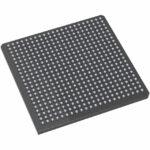 AFS1500-1FGG484K
The activity of extra discounts on wholesale prices is in full swing…
Please fill in your contact information and we will send you the latest wholesale price list.




