 ChipApex | Global Electronic Components Supplier
SEARCH
Search Product
Search Post
— IC芯片 | 连接器 | 传感器 | 被动器件 —
Search productSearch post
— IC芯片 | 连接器 | 传感器 | 被动器件 —
Consult the customer manager about the wholesale price.
consultation hotline:86-132-6715-2157
email:[email protected]
Contact the product manager for consultation. One-stop consultation is available.
Do you want a lower wholesale price? Please send us your inquiry and we will reply immediately.
The AFS1500-FGG484 is a Fusion field-programmable gate array manufactured by Microchip Technology. It features 38,400 configurable logic blocks and an equivalent of 1,500,000 system gates. The device operates within a supply voltage range of 1.425 V to 1.575 V, with a nominal rating of 1.5 V. It supports a maximum operating frequency of 667 Mb/s and includes four high-speed transceivers. The component is housed in a 484-ball fine-pitch ball grid array package and is rated for industrial temperature operation from -40°C to +85°C.
Verify the specific suffix codes against official Microchip documentation to ensure correct package type, temperature grade, and lead-free status. Confirm that the requested part matches the exact pinout and electrical specifications required for your design. Check for any recent product change notices or obsolescence announcements directly from the manufacturer before placing orders.
Select this model when a combination of high-density logic resources and embedded processing capabilities is required. Ensure the design utilizes the available I/O count and transceiver lanes efficiently. Consider the power consumption profiles at different clock speeds and verify thermal dissipation requirements for the FBGA-484 package in the target enclosure environment.
This component belongs to the Microchip Fusion family, which combines traditional FPGA fabric with embedded microprocessor cores. It bridges the gap between complex ASICs and standard FPGAs by offering lower power consumption and smaller form factors. The AFS1500 variant represents a mid-range density option within this series, suitable for applications needing moderate logic capacity alongside processing functions.
Direct replacements include other variants within the AFS1500 series such as AFS1500-2FG484 or AFS1500-FG484PP, provided pin compatibility and electrical characteristics align. Cross-family migration to ProASIC3 or IGLOO2 devices requires significant schematic and firmware redesign due to architectural differences.


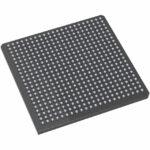 AFS1500-FGG484
The activity of extra discounts on wholesale prices is in full swing…
Please fill in your contact information and we will send you the latest wholesale price list.




