 ChipApex | Global Electronic Components Supplier
SEARCH
Search Product
Search Post
— IC芯片 | 连接器 | 传感器 | 被动器件 —
Search productSearch post
— IC芯片 | 连接器 | 传感器 | 被动器件 —
Consult the customer manager about the wholesale price.
consultation hotline:86-132-6715-2157
email:[email protected]
Contact the product manager for consultation. One-stop consultation is available.
Do you want a lower wholesale price? Please send us your inquiry and we will reply immediately.
The AFS600-2FGG484 is a Field Programmable Gate Array from the Microchip Fusion family, manufactured using an advanced 130-nm, 7-layer metal, flash-based CMOS process. It provides 600,000 system gates and operates on a single 3.3 V power supply with an integrated 1.5 V regulator. The device supports live at power-up functionality and features nonvolatile flash technology that retains configuration when powered off. It includes embedded user flash memory of 2 Mb and supports in-system programming via JTAG with 128-bit AES security. The component is housed in a 484-ball PBGA package with a 1.0 mm pitch.
Verify the specific suffix codes against official Microchip documentation to confirm temperature range and package variations. Ensure compatibility with existing design tools for the Fusion family. Confirm RoHS compliance status through current manufacturer declarations. Check for any product change notifications affecting pinout or electrical characteristics before finalizing procurement orders.
Select this model for applications demanding high gate density with nonvolatile flash architecture. Compare performance metrics against IGLOO2 series if lower power consumption is critical. Evaluate the need for embedded ARM cores; if required, consider the M7AFS or SmartFusion families instead. Verify I/O voltage requirements match the 3.3 V supply constraint of the standard Fusion devices.
This component belongs to the Microchip Fusion mixed-signal FPGA family, which bridges the gap between traditional ASICs and standard FPGAs. The Fusion line emphasizes low power, high security, and instant-on capabilities due to its proprietary flash technology. It serves as a successor to earlier Actel ProASIC and SmartFusion lines, offering enhanced integration and reduced bill-of-materials complexity.
Direct replacements within the same package and functionality include the M1AFS600-FFGG484 for commercial grade or M7AFS600-2FG484I for industrial grade with added ARM core support. Verify pin-to-pin compatibility and software toolchain support before substitution. Cross-reference datasheets for timing differences and power specifications.


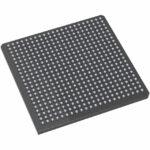 AFS600-2FGG484
The activity of extra discounts on wholesale prices is in full swing…
Please fill in your contact information and we will send you the latest wholesale price list.




